Tiny Home Laws: Over the past decade, the tiny home movement has cemented its place in the American cultural landscape, proving to be far more than just a passing trend. The numbers tell a story of explosive growth: according to Worldmetrics, the movement expanded by a staggering 67% in the last ten years. Google searches for “tiny home laws” have skyrocketed by 160% in the last five years alone, with related terms like “tiny home builders” and “tiny home plans” surging even higher. It’s no surprise that a recent poll found that 73% of Americans would consider living in a tiny house, with Gen Z and Millennials leading the charge.
The appeal is multifaceted, touching on financial freedom, a desire for a simpler life, and a deeper connection with our surroundings. Owners consistently report improved relationships and a remarkable 41% decrease in stress after downsizing. This is why HGTV spotlights are filled with cozy, custom cabins and why Instagram feeds showcasing thoughtful design in tiny spaces are more popular than ever.
Whether you’ve been scrolling through listings of “tiny home laws,” exploring the convenience of prefab tiny homes, or comparing different tiny home models, there is one monumental question you must answer before taking the leap: How do I figure out if tiny living is legal in my area?
The single most common obstacle to going tiny isn’t the small space; it’s the complex web of zoning laws, building permits, and housing codes that can change dramatically from one state to the next, one county to the next, and even between two streets in the same town.
So, before you fall in love with the perfect design, you must first do your due diligence. In this definitive guide, we’ll break down exactly how to research the tiny home laws in your area so you can make big decisions towards tiny living with absolute confidence.
Step 1: Define Your Dream – What Kind Of Tiny Home Do You Want?
Before you can understand the rules, you must first define what you’re building. Local laws treat different types of structures in vastly different ways. How do you plan to use your tiny home laws?
- Will it be your full-time primary residence?
- Is it a vacation property or an AirBNB rental?
- Will it be an extension of your existing home—a guesthouse for family, a home office, or a studio?
Your intended use will help you determine which of the three main types of tiny home structures is right for your lifestyle.
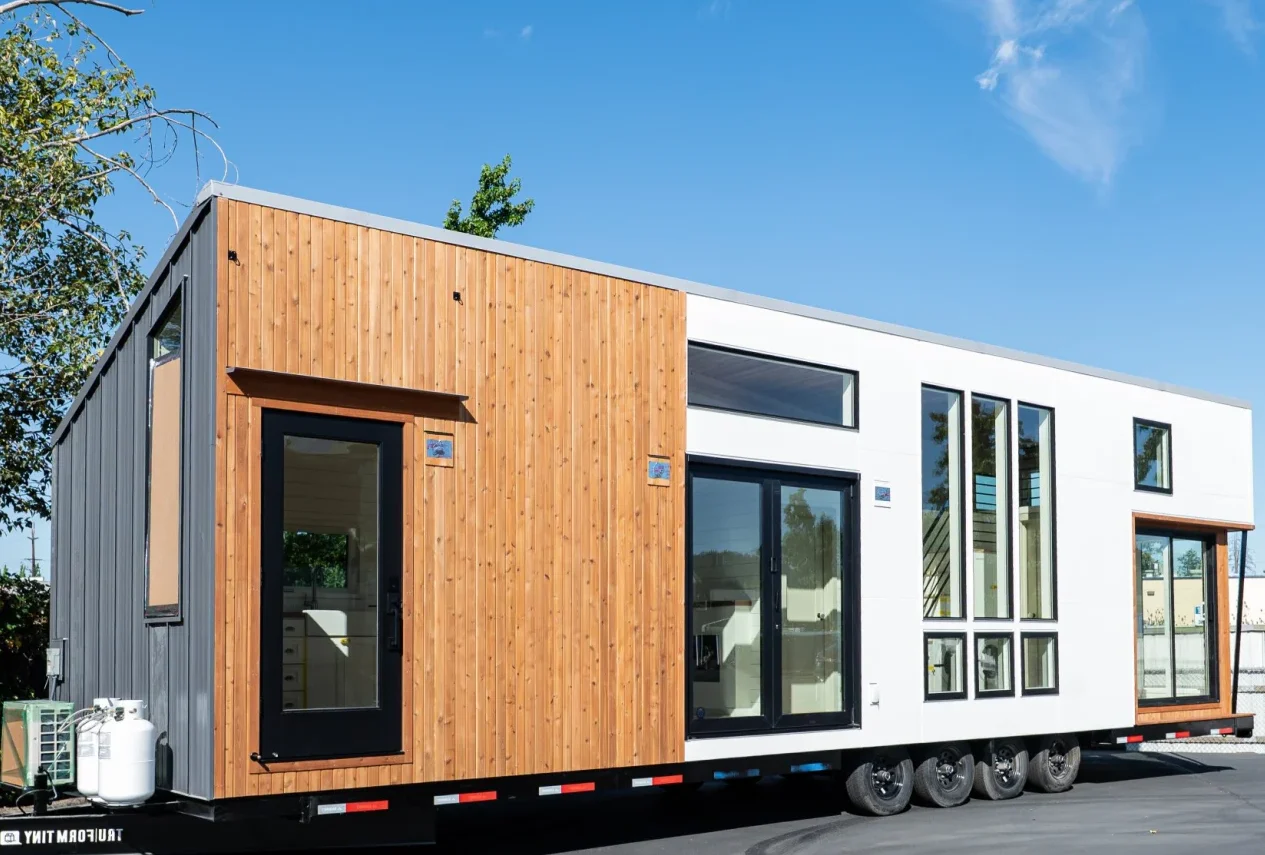
1. The Tiny Home on Wheels (THOW)
This is the most iconic image of the movement. A THOW is a custom-built home constructed on a trailer chassis, designed for mobility.
- Legal Classification: In most jurisdictions, THOWs are legally classified as Recreational Vehicles (RVs).
- Best For: Nomadic adventure, flexibility, and those who want the freedom to move without selling their home. They can technically serve as a full-time residence wherever RVs are also permitted, such as in a dedicated RV park, a tiny home community, or designated cabin clusters.
- Key Consideration: The challenge lies in finding a legal place for long-term or permanent parking outside of an established park.
2. The Foundation-Based Tiny Home
This is a small home, typically under 500 square feet, that is built permanently on a concrete slab or pier foundation.
- Legal Classification: This is treated as a traditional, permanent single-family dwelling by building departments.
- Best For: A longer-term investment on land you already own. It can be treated as real property, appreciate in value, and is often easier to finance than a THOW.
- Key Consideration: It must comply with all local residential building codes and zoning laws, including, most critically, minimum square footage requirements, which can be a major hurdle.
3. The Accessory Dwelling Unit (ADU)
An ADU is a secondary, smaller housing unit located on the same property as a larger, primary home. It can be a foundation-based structure or, in some progressive areas, a THOW.
- Legal Classification: An ADU has its own specific set of zoning rules, separate from a primary residence.
- Best For: Adding a rental unit for extra income, creating a guesthouse, or building an in-law suite in your backyard.
- Key Consideration: The legality of ADUs is highly localized. Some cities have embraced them to combat housing shortages, while others heavily restrict or ban them.
Gaining clarity on which of these you are building or buying is the essential first step. A buyer looking at a tiny home classified as an RV in one city may face a completely different legal process than someone building a foundation-based ADU in the next town over. Expert builders like SVOLTEX have experience navigating these distinctions, offering custom designs for everything from mobile THOWs to permanent foundation-based homes and ADUs. Partnering with a knowledgeable builder can simplify the process of aligning your dream home with local regulations.
Step 2: Know the Rules of the Game – Building Codes vs. RV Codes
Once you’ve identified your home type, the next step is to understand the safety and construction standards that govern it. There are two main sets of rules you’ll encounter.
Building Codes for Foundation Homes (IRC Appendix Q)
For tiny homes built on a foundation, the primary set of rules is the International Residential Code (IRC), which is the model building code used by most states and local jurisdictions. For years, the IRC’s rules made building a tiny home difficult. However, a major breakthrough occurred with the adoption of IRC Appendix Q.
IRC Appendix Q is a specific section of the code tailor-made for houses under 400 square feet. It provides standards for things like:
- Loft access (ladders and stairs)
- Reduced ceiling height requirements
- Emergency escape and rescue openings
Many states, including California, Oregon, and Colorado, have adopted Appendix Q, creating a clear legal pathway for building a foundation-based tiny home. If your state has adopted it, you have a much easier road ahead.
RV Codes for Tiny Homes on Wheels (RVIA Certification)
Other states and counties classify THOWs strictly as recreational vehicles. This means they are not subject to local building codes. Instead, they should be built to the standards set by the RV Industry Association (RVIA).
An RVIA certification is a seal that indicates the builder has followed over 500 safety standards for electrical, plumbing, heating, and fire safety. While not always legally required, this certification is crucial because:
- Many RV parks and tiny home communities require it for entry.
- It makes it easier to get financing and insurance.
- It provides peace of mind that your home was built to established safety standards.
Quick Search Tip: To find the most accurate, up-to-date resources for your state, use this specific format in Google: "[Your State] tiny home laws site:.gov" This will filter your search to only show results from official state government websites, like the Department of Housing or the state building authority.
Step 3: The Local Deep Dive – Unraveling Zoning Laws
This is where the real work begins. Even if your state has adopted tiny-home-friendly policies like Appendix Q, your local city or county zoning code is the ultimate authority. Zoning ordinances are the detailed rules that govern what you can build and where.
Finding this information means visiting your local planning and zoning department’s website and diving into the municipal code. Search for the following key terms:
- “Accessory Dwelling Unit” or “ADU”
- “Minimum Dwelling Size” or “Minimum Square Footage”
- “Recreational Vehicle” or “RV Parking”
- “Manufactured Home” or “Mobile Home”
- “Cottage Cluster” or “Pocket Neighborhood”
If you can’t find clear references to “tiny homes,” look for these related categories. Many regulations simply don’t use the phrase “tiny house,” even though the rules still apply. Be prepared for some detailed reading.
Step 4: Make the Call – How to Talk to Your Local Planning Department
If the website is unclear, your next step is to call the planning department. But how you frame your questions is critical. Asking a vague question like “Are tiny houses legal here?” is likely to get you a quick, uninformed “no.”
Instead, be specific, educated, and professional. Use the following script as a guide:
You: “Hello! My name is YourName
and I’m exploring my housing options for a property located at YourAddressorParcelNumber,ifyouhaveone
in YourCity/County
. I’m calling to check on some specific rules and requirements that might apply. Would you have a moment to answer a few questions?”
- “I’m looking at the possibility of a smaller primary dwelling. Does the county/city have a minimum square footage requirement for a single-family home?”
- “I’m also interested in Accessory Dwelling Units. Are ADUs permitted on my property, and if so, what are the size and placement requirements?”
- “How does this jurisdiction classify Tiny Homes on Wheels? Are they treated strictly as RVs, or can they be used as a permanent residence or an ADU?”
- “If a structure is classified as an RV, are there rules about living in it full-time outside of a designated RV park?”
- “If I were to place a tiny home on a permanent foundation, what would the permitting process look like? Is it the same as for a standard-sized home?”
Pro Tip: Be polite and take notes! Write down the name of the person you spoke with and any specific ordinance numbers they mention. This allows you to look them up later and demonstrates that you are a serious, responsible future resident.
Step 5: Find Your Allies – Connect with Local Tiny Home Communities
The good news is, you don’t have to navigate this alone. Many others have walked this path before you. Tapping into the local tiny home community can provide you with invaluable information and support.
- Social Media is Your Friend: Check Facebook for groups like “YourState Tiny House Enthusiasts” or “YourCity ADU Builders.” Reddit communities like r/tinyhouses are also a treasure trove of information.
- What to Look For: These groups can offer tips on friendly local officials, contractors who understand tiny builds, leads on available land or parking spots, and moral support from people who have successfully navigated the process.
Step 6: The Practical Hurdle – Utilities and Hookups
One of the trickiest parts of the legal process involves utilities.
- Foundation-Based Homes & ADUs: These are required to go through the same permitting process as a traditional house. This means a full building permit application with plans for permanent utility hookups, approvals from the water and sewer districts, and electrical permits subject to inspection.
- Tiny Homes on Wheels (THOWs): These are typically treated as RVs and use flexible “RV-style” hookups: a heavy-duty extension cord for power, a potable water hose, and a sewer hose for waste. While this offers incredible flexibility, many states will not acknowledge these as “permanent” living arrangements outside of designated RV parks or tiny home communities zoned for this purpose.
Conclusion: The Road to Tiny Living is Paved with Research
If you’ve made it this far, you can see that while tiny home laws can be complex, they are not insurmountable. The path to legal tiny living is a journey of careful research, clear communication, and strategic planning.
By understanding the nuances between state laws and local zoning, knowing how to define your tiny home type, and asking the right questions, you are well on your way to making your dream a reality. The rewards—financial freedom, flexibility, mobility, and a beautifully designed life—are more than worth the effort.