You’ve been captivated by the industrial-chic aesthetic, the promise of sustainability, and the dream of a unique, affordable home. You’ve decided to build with shipping containers. But before you can turn that steel box into a comfortable living space, you must confront its most fundamental challenge: a shipping container is an uninsulated metal shell, highly susceptible to the whims of Mother Nature. This means you likely need shipping container insulation, but what kind of insulation is best?
This comprehensive article will answer all your questions about shipping container insulation. You may have heard that polyurethane spray foam is the only variety worth considering. As you’ll find out below, while it is an excellent choice, it’s not always the only case.
Our goal is to give you a definitive guide to not only understanding insulation but also choosing the perfect type for your specific needs. We’ll cover critical factors like your climate, budget, and design, then dive deep into the pros and cons of every major insulation type, from spray foam to eco-friendly wool.
With that said, let’s begin with the basics of why insulation is the most critical decision you’ll make for your container project.
What is Insulation, and Why is it Non-Negotiable for Containers?
To understand why insulation is so vital, let’s use a simple analogy. Imagine you have an open-air porch that gets scorching hot in the summer. Would you try to air-condition it? Of course not—you’d be trying to cool the entire neighborhood! You would first build walls to separate the inside air from the outside air.
But what if those walls were made of thin plastic wrap? They would stop the wind, but you’d still feel the heat radiating through. This is because heat energy can move through solid materials via a process called conduction.
Insulation is a material specifically designed to resist and slow down this transfer of heat energy. It keeps the warmth inside during winter and outside during summer. It generally works by trapping air or other gasses in a complex matrix of tiny cells. Gases are poor conductors of heat, making them excellent insulators. A material’s resistance to heat flow is measured by its R-value—the higher the R-value, the better the insulation.
The Steel Box Problem: Conduction and Condensation
So why do you need shipping container insulation so desperately? Unlike traditional wood-frame houses, shipping container homes have an exterior made entirely of Corten steel. Steel is a fantastic conductor of heat, which is the exact opposite of what you want in a wall.
- Extreme Heat Transfer (Conduction): On a hot, sunny day, the steel skin can absorb a tremendous amount of radiant energy, getting significantly hotter than the ambient air. Without shipping container insulation, that heat radiates directly into your living space. In winter, the cold steel will suck the warmth out of your home just as quickly.
- The Condensation Menace: This is a critical, often overlooked problem. When warm, moist air inside your container comes into contact with the cold steel wall, the moisture in the air will condense into water droplets. This is the same reason a cold glass of iced tea “sweats” on a humid day. This condensation can lead to a host of devastating problems, including rust, corrosion, black mold, and rot in your interior framing and flooring.
Simply stated, unmodified shipping containers are great at keeping the outside air from getting inside, but they perform terribly at keeping heat from moving through their walls and are highly prone to condensation.
How Climate Affects Your Insulation Decision
Do you always need insulation? The only exception is if you are lucky enough to live in a location with a climate so perfectly temperate that you never need heating or cooling, like parts of Southern California or the Mediterranean.
For everyone else, the choice is not if you should insulate, but how. You could technically forgo insulation and rely on a powerful HVAC system, but you’d be making a huge financial mistake. The ongoing heating and cooling costs would be astronomical. Over time, any money saved from not insulating quickly disappears as you pay more and more for energy.
Svoltex Pro Tip: Unless you live in a perfect climate and have a high tolerance for temperature swings, you are going to need to insulate your cargo container. Forgoing it will likely lead to regret, high energy bills, and serious problems with condensation.
Where to Place Your Insulation: Interior vs. Exterior
Before you choose a material, you have to decide where it will go. You have two primary options:
1. Interior Insulation (The Conventional Method)
This is the most common approach. The shipping container insulation is placed inside the shipping container, typically within the cavities of a wood or steel stud wall that you build.
- Pros: Preserves the iconic, industrial look of the container’s exterior. The process is more protected from the elements during construction. It’s generally a more straightforward DIY project.
- Cons: The main drawback is the loss of valuable interior space. A typical stud wall with insulation and drywall can reduce the interior width by 6 inches or more, which is significant in an already narrow 8-foot-wide container.
2. Exterior Insulation (The High-Performance Method)
For some, exterior insulation is a better fit. In this case, you apply a layer of rigid insulation to the outside of the container and then cover it with some type of weather-resistant cladding or siding.
- Pros: Maximizes every inch of interior space. It completely eliminates the condensation issue by keeping the steel shell warm and within the building’s “thermal envelope.” It allows for a more traditional exterior appearance, which can be beneficial for meeting certain building codes or HOA rules.
- Cons: You lose the corrugated steel aesthetic. It’s generally more expensive and complex, often requiring professional installation.
The Top 5 Types of Shipping Container Insulation
Now, let’s explore the materials themselves. We’ve grouped them into five broad categories.
1. Spray Foam Insulation (The Gold Standard)
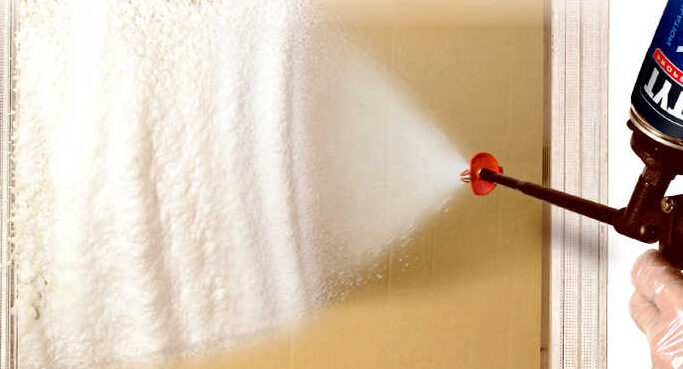
You’ve likely heard that spray foam is the best, and for shipping container insulation, there’s a lot of truth to that. It’s a liquid that is sprayed on and expands to fill every crack and crevice, creating a seamless, continuous barrier.
- What It Is: A two-part chemical mixture that is sprayed through a nozzle. It adheres directly to the steel and hardens into a solid foam.
- Pros:
- Highest R-Value: Closed-cell spray foam (ccSPF) offers one of the highest R-values per inch (R-6 to R-7).
- Air and Vapor Barrier: It creates a perfect air and vapor barrier, completely eliminating the risk of condensation on the steel walls. This is its single biggest advantage.
- Fills Gaps Perfectly: It expands to fill the awkward corrugated sections of the container wall, leaving no air gaps.
- Adds Structural Rigidity: It adheres to the walls and can add a small amount of structural strength.
- Cons:
- Cost: It’s one of the most expensive options.
- Professional Installation Required: It requires specialized equipment and safety gear, making it a job for certified professionals, not a DIY project.
- Off-Gassing: There is some concern with off-gassing of volatile organic compounds (VOCs) immediately after application. Ensure your installer uses a low-VOC product and that you allow for adequate curing time before occupancy.
- Best For: Almost everyone. If your budget allows, closed-cell spray foam is the technically superior solution for shipping container insulation due to its high R-value and built-in vapor barrier properties. The Spray Polyurethane Foam Alliance (SPFA) is a great resource for learning more.
2. Expanded Foam Panel Insulation (The Best DIY Option)
Also known as rigid foam boards, these are large, stiff panels of foam that are cut to size and attached to the container walls.
- What It Is: Pre-formed boards of foam, typically made of Polystyrene (EPS or XPS) or Polyisocyanurate (Polyiso). Some companies, like InSoFast, make panels specifically molded to fit into the shipping container insulation’s corrugations.
- Pros:
- High R-Value: Offers a very good R-value per inch (R-4 to R-6.5), second only to spray foam.
- DIY-Friendly: Relatively easy to cut and install with adhesive and mechanical fasteners.
- Vapor Barrier: Closed-cell foam boards are impermeable to moisture, acting as a good vapor barrier.
- Cons:
- Sealing the Gaps: The biggest challenge is creating a perfect seal. Air gaps can occur between boards and between the boards and the container’s corrugated walls, which can lead to condensation. All seams must be meticulously taped and sealed.
- Labor Intensive: Cutting panels to fit around windows, doors, and outlets can be time-consuming.
- Best For: DIY builders who want high performance without the cost and complexity of professional spray foam.
3. Blanket Insulation (The Budget Option)
This is the fluffy shipping container insulation that comes in pre-cut batts or long rolls, familiar to anyone who has seen a traditional house being built.
- What It Is: Batts or rolls made of flexible fibers, most commonly fiberglass, mineral wool, or denim/cotton.
- Pros:
- Low Cost: It is by far the cheapest insulation material available.
- Easy to Find: Available at any big-box hardware store.
- Eco-Friendly Options: Sheep wool and denim insulation are great natural, non-toxic alternatives.
- Cons:
- HIGH CONDENSATION RISK: This is a critical flaw for container homes. Blanket insulation is permeable to air and vapor. Warm, moist air from inside your home will pass through it, hit the cold steel wall, and condense. This traps moisture within your wall cavity, leading to mold and rust. Using a plastic vapor barrier on the inside is not a solution, as it creates a “double barrier” that can trap moisture from either side.
- Lower R-Value: Has a lower R-value per inch (R-3 to R-4) than foam options.
- Best For: Limited use in very dry climates, or for interior walls. We strongly discourage using blanket insulation directly against the exterior steel walls of a container in most climates.
4. Loose-Fill and Non-Traditional Insulation
This category includes materials that are blown into wall cavities or are more unconventional.
- Cellulose (Loose-Fill): Made from recycled paper, this is a common attic insulation. However, it’s not recommended for containers as it can settle over time, leaving gaps, and it absorbs moisture readily.
- Hempcrete & Straw Bale: These are amazing eco-friendly materials, but they have a very low R-value per inch. To get adequate insulation, you would need incredibly thick walls, sacrificing a huge amount of interior space. They are generally more practical for exterior insulation applications.
- Best For: Eco-conscious builders in moderate climates who are willing to sacrifice significant interior space for sustainability.
Beyond Insulation: Other Ways to Control Thermal Energy
Insulation is your primary defense, but it’s not the only tool in your arsenal.
- Reflective/Radiant Barriers: In hot, sunny climates, a huge amount of heat gain comes from solar radiation. A radiant barrier, which is often a foil-like material or a special ceramic-infused paint, is designed to reflect this infrared energy before it can be absorbed by the steel. This is an excellent supplement to traditional insulation.
- Green or “Living” Roof: A rooftop garden does more than just look cool. The soil and plants block solar radiation and can help keep the container cooler in the summer.
- Passive Design: This is about using smart design to work with the climate. This includes orienting your container to minimize direct sun in the summer, using roof overhangs to shade windows, and ensuring good cross-ventilation. Learning about passive design principles from resources like the Passive House Institute can dramatically reduce your energy needs.
Making a Decision: Your Path Forward
As you’ve seen, you have a vast number of options. Choosing the best shipping container insulation requires a clear understanding of your priorities.
- If your priority is maximum performance and longevity: Choose professional, closed-cell spray foam. The upfront cost is higher, but it is the technically superior solution that solves the issues of heat transfer and condensation in one step.
- If your priority is a DIY build with high performance: Choose rigid foam panels. Take your time to meticulously seal every seam to create a continuous air and vapor barrier.
- If your budget is extremely tight: You might consider blanket insulation, but you must understand and mitigate the serious risks of condensation, possibly by using it in combination with a thin layer of spray foam (a “flash coat”) to create a vapor barrier.
Insulation is not an afterthought; it needs to be a consideration from day one, as it affects your framing, your interior dimensions, and your long-term comfort and energy bills.
Summary
You have quite a few insulation options at your disposal, driven by your climate, design, and budget. While closed-cell spray foam is widely recommended for good reason, other options can work if you understand their pros and cons. Remember, you can also combine methods. For instance, you could spray foam the walls and use less expensive foam boards for the floor.
Whatever you do, start early, do your research, and develop a clear vision for your shipping container construction dream. A well-insulated container is the foundation of a home you’ll love for years to come!