In a world filled with mass-produced designs and artificial environments, there is a growing, primal yearning to reconnect with the natural world. We understand instinctively that no matter how exquisite a piece of man-made handicraft is, it can’t compare to the magical, effortless craftsmanship of nature. A single ancient tree, a rugged cliffside, or a tranquil forest floor can create the most beautiful picture scroll imaginable. What if you could live inside that picture?
This is the philosophy behind a new wave of architectural design: to use the container as a carrier to move nature into the house, creating a leisure holiday home or a permanent residence that is not just close to nature, but a part of it. This is the ultimate expression of the shipping container home—a structure that erases the boundaries between inside and out, allowing you to enjoy a profound and constant sense of tranquility.
This isn’t just about building a house in the woods; it’s about building the woods into your house. This guide will explore the design principles, strategies, and mindset required to transform an industrial steel box into a seamless gateway to the natural world.
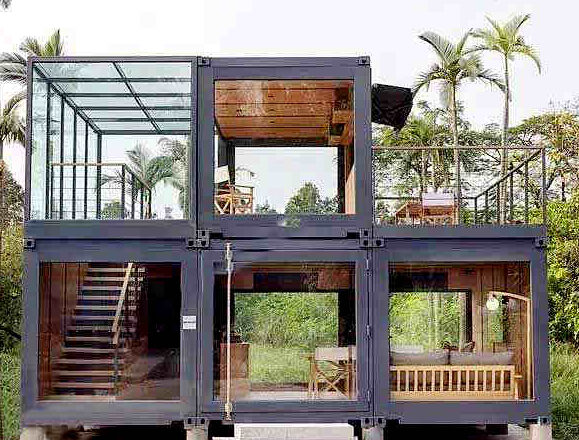
A Building Without Walls: Redefining the Concept of Home
Imagine a building without traditional walls. This is the radical promise of this design ethos. The solid, opaque barriers that typically separate us from the outdoors are replaced by vast expanses of floor-to-ceiling glass windows. The indoor and outdoor landscapes become one, visually and experientially connected.
From the comfort of your living room, the surrounding natural woods are your walls. The changing seasons provide an ever-shifting wallpaper of green, gold, and white. Living indoors feels like camping outdoors, but with all the comforts of modern life. It’s a concept that proves container buildings are not just for stark industrial designs; they can be the perfect medium for creating the ultimate natural buildings.
The Perfect Paradox: Why a Steel Box is the Ideal Choice
It seems counterintuitive. How can a cold, hard, industrial object like a shipping container be the best vehicle for creating a home that feels organic and natural? The answer lies in its unique structural properties and its minimalist form.
- Inherent Strength: Shipping containers are incredibly strong. Their Corten steel frames are designed to be stacked nine-high while carrying tens of thousands of pounds. This structural integrity means they can support massive openings for glass without requiring bulky, view-obstructing columns and headers that would be necessary in traditional wood-frame construction.
- A Minimalist Frame: The simple, rectangular form of a container does not try to compete with the complexity of nature. Instead, it acts as a perfect, clean frame, drawing the eye outward and highlighting the beauty of the landscape. It becomes a minimalist canvas where nature is the masterpiece.
Design Strategies: How to Move Nature Indoors
Achieving this seamless integration requires a series of deliberate and thoughtful design choices. It’s a process of subtraction—removing barriers—and addition—introducing natural elements to soften the industrial form.
1. The Power of Glass: Creating the “Invisible” Walls
The most critical element in this design is the strategic use of glass. This goes beyond simply adding a few large windows.
- Floor-to-Ceiling Glass Walls: This is the signature feature. Entire sections of the container’s corrugated steel walls are removed and replaced with high-performance, double- or triple-pane glass panels. This dissolves the visual barrier completely.
- Sliding and Folding Glass Doors: By installing large, multi-panel sliding or accordion-style folding doors, you can physically open up the entire side of the home to the outdoors, creating a true indoor-outdoor living space perfect for decks and patios.
- Clerestory Windows: These are high, narrow windows placed near the ceiling. They allow natural light to flood the space from multiple angles and offer glimpses of the treetops and the sky, further enhancing the feeling of being immersed in the environment.
The result is a home where light and landscape are the primary design elements, a concept celebrated in architectural publications like Dezeen, which frequently showcase homes that blur the lines between inside and out.
2. Softening the Steel: Wood, Stone, and Natural Textures
While glass connects you visually, natural materials connect you texturally and emotionally. The wood and glass layers in the building are essential to soften the inherent industrial characteristics of the container and establish a sense of harmony with the natural surroundings.
- Exterior Wood Cladding: Covering parts of the container’s exterior with natural wood siding—like cedar, pine, or thermally modified timber—helps the structure blend into a wooded environment. The contrast between the warm wood and the cool steel can be architecturally stunning.
- Interior Natural Finishes: Using hardwood for the floors, wood planks on the ceiling, or even a feature wall made of reclaimed wood brings the warmth and character of nature inside. Stone accents, such as a slate floor in the entryway or a stone-clad fireplace, can further ground the home in its landscape.
These materials do more than just look good; they bring the light and tropical or woodland scenes into the space, making it feel cohesive and serene.
3. Modular Magic: Crafting Spaces and Framing Views
The modular structure of the container is a powerful tool for a site-specific design. A single box can feel confining, but combining multiple units unlocks endless possibilities. As the initial concept noted, the building can use 4 units to create 6 different spaces with an area of 162 square meters.
This modularity allows an architect to:
- Create Courtyards and Breezeways: By arranging containers in an “L” or “U” shape, you can create sheltered outdoor living spaces that are protected from the wind and feel like an extension of the home’s interior.
- Provide a Wide Glass Opening: You can orient each container to capture a specific view. One module might be positioned to frame the sunrise, another to look out over a valley, and a third to face a unique rock formation. This allows residents to have a comprehensive and curated experience of the surrounding environment.
- Vary the Experience: The ability to stack and offset containers creates a more dynamic structure with different levels, balconies, and rooftop decks, each offering a unique perspective on the landscape.
4. A Light Footprint: Treading Gently on the Earth
A core part of living in harmony with nature is respecting it. The construction of a shipping container home can have a significantly smaller environmental footprint than traditional building methods.
When you do not want to continue operations, the entire building can be moved away, leaving minimal traces in the original landscape. This is possible because:
- Minimal Foundation: Container homes can often be set on concrete piers or screw piles rather than a massive, site-scarring concrete slab foundation. This dramatically reduces the impact on the land, preserving root systems and natural drainage.
- Upcycling and Sustainability: The very act of using a retired shipping container is a powerful form of recycling. It’s a philosophy of adaptive reuse, a key principle of sustainable design championed by organizations like the U.S. Green Building Council.
This approach ensures that your home is not an intrusion on the landscape, but a respectful guest.
Svoltex: Your Partner in Building a Nature-Centric Home
Creating a building without walls, one that lives and breathes with its environment, requires deep expertise in both design and engineering. The structural modifications needed to replace steel walls with vast panes of glass must be calculated and executed flawlessly.
At Svoltex, we specialize in turning these ambitious visions into reality. We understand how to use the container as a carrier to move nature into the house. Our team of engineers and designers works with you to orient your home perfectly on your land, to engineer the wide-open spaces you desire, and to select the natural materials that will create a true sense of harmony. We ensure that your shipping container home is not only beautiful but also structurally sound, energy-efficient, and built to last.
Conclusion: A Home That is Both a Shelter and a Vista
The shipping container home, when thoughtfully designed, offers a living experience unlike any other. It is a shelter that doesn’t shield you from nature, but rather, immerses you in it. It is a solid, secure structure that feels boundless and open. By embracing the power of glass, the warmth of wood, and the flexibility of modular design, you can create a home where the line between inside and out simply disappears. You can live in a space where the walls are made of trees and the ceiling is filled with stars, enjoying the profound tranquility that only comes from being truly connected to the natural world.
Frequently Asked Questions (FAQ)
Q1: Isn’t a house with so much glass inefficient to heat and cool? A: Not with modern technology. High-performance, triple-pane glass with low-E coatings and argon gas fill can have excellent insulating properties (a high R-value). When combined with passive solar design principles—like orienting the glass to capture the sun’s warmth in winter and using overhangs to block it in summer—a glass-walled container home can be surprisingly energy-efficient.
Q2: What is the cost of building a shipping container home like this? A: The cost varies dramatically. While the container shell itself is affordable, high-end, large-format glass is a significant expense. The final cost will depend on the number of containers, the amount and quality of the glass, the type of wood and interior finishes, and the complexity of the site and foundation. It is a custom architectural project and should be budgeted for accordingly.
Q3: Is it difficult to get building permits for such an unconventional design? A: It can be more challenging than for a standard home. You will need a full set of architectural and structural engineering plans to submit to your local building department. Working with an architect and builder, like Svoltex, who has experience with container homes.