Why are you interested in shipping container home? If you’re asking this question, you’re not alone. The “cargotecture” movement has exploded from a niche architectural curiosity into a mainstream housing phenomenon. But the fascination goes far beyond the industrial-chic aesthetic. For a growing number of people, the appeal is deeply personal and intensely practical. I believe that as long as you are interested in shipping container home, certain aspects of this lifestyle have already touched you.
To truly understand this shift, you need to listen to the voices of the people who are living it, dreaming it, and building it. We’ve gathered insights from a diverse group of individuals, and their reasons for choosing a steel box over a traditional house are a powerful reflection of our changing world. Let’s take a look at these people and their motivations. Maybe they can give you some inspiration for your own journey.
This guide will delve into the five core drivers behind the movement, using real-world perspectives to explore why so many are turning to this innovative form of housing.
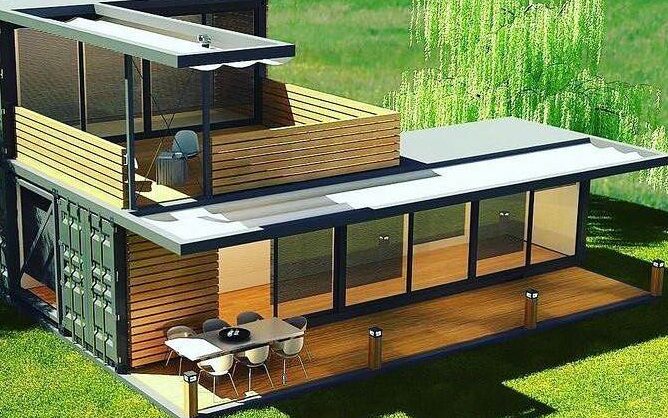
1. The Overwhelming Driver: A Quest for Financial Freedom
By far, the most powerful motivator for exploring shipping container home is the pursuit of financial freedom and an escape from a housing market that feels increasingly out of reach. The traditional path to homeownership, once a cornerstone of the American and Canadian dream, now often feels like a trap.
For many, the numbers simply don’t add up anymore. As Reilley Squires puts it, the frustration is palpable:
“The rising prices in the home market are what’s on my mind. Political idiots are saying $640,000 is still within reach of most Canadians for a home purchase, which is astronomically f*cked. With a storage house, I can build and plan what I want, and once it’s done, I only have to worry about land.”
Reilley’s sentiment captures the feeling of a generation being priced out of the market. The container home represents a way to take back control, to build a home based on one’s own vision and budget, separating the cost of the structure from the often-inflated cost of land.
This isn’t about being “broke”; it’s about being smart and strategic with money. As Kamille Huggins clarifies, it’s a conscious choice:
“Not necessarily broke, but interested in low-cost housing. Also interested in the minimal style.”
The goal is to achieve homeownership without sacrificing one’s financial future. This sentiment is echoed by Cole Taatjes, who sees the traditional mortgage system as fundamentally flawed:
“For me, it’s a combination of affordability and minimalism. A thirty-year mortgage makes no sense and debt is something to be avoided. Interest is the reason old people who have worked their whole lives have very little to show for all those years working.”
Cole’s perspective highlights a profound shift in thinking. It’s a rejection of the idea that decades of debt are a prerequisite for having a place to call your own. The shipping container home becomes a tool to build equity quickly and live a life free from the crushing weight of interest payments. This financial strain is well-documented by economic sources like the Federal Reserve, which tracks the very affordability issues that drive people to seek alternatives.
2. A Philosophy of Living: Minimalism and Intentionality
Beyond the dollars and cents, the interest in shipping container home is deeply philosophical. It aligns with a broader cultural movement towards minimalism, sustainability, and intentional living. It’s about consciously choosing to live with less in order to live more.
Mydgie Dan perfectly encapsulates this holistic approach:
“Save money, recycle used products, design challenges, reduce the size of my living space so as not to waste materials, and utilities, etc. This is why I like shipping container homes.”
Mydgie’s list touches upon a core appeal: the elegance of efficiency. A smaller home consumes less energy, requires fewer resources to build and maintain, and forces a more mindful approach to consumption. It’s a lifestyle choice that feels both responsible and liberating.
This desire for a “minimal style,” as Kamille Huggins mentioned, is about more than just aesthetics. It’s about simplifying one’s life to reduce stress and focus on what truly matters—experiences, relationships, and personal growth—rather than the accumulation and maintenance of “stuff.” This philosophy, popularized by figures like The Minimalists, finds its perfect architectural expression in the compact and efficient footprint of a container home.
3. A Home with a Conscience: The Power of Sustainability
For a growing number of people, the environmental impact of their choices is a top priority. The construction industry is a major consumer of raw materials and producer of waste. The container home offers a compellingly sustainable alternative.
Marian Monaghan gets straight to the heart of this benefit:
“Another very good reason is to reuse and repurpose something that would be scrapped and surplus to requirements.”
This act of “upcycling” is a powerful form of recycling. Every shipping container repurposed into a home is tons of steel that does not need to be melted down and re-manufactured, an incredibly energy-intensive process. It takes a product at the end of its shipping life and gives it a new, long-term purpose. This aligns with the principles of green building and adaptive reuse, which are championed by organizations like the U.S. Green Building Council (USGBC).
As Mydgie Dan also noted, the goal is to “recycle used products.” This ethos often extends beyond the container itself, with many builders incorporating reclaimed wood, salvaged fixtures, and other recycled materials into their designs, creating homes that are as eco-friendly as they are beautiful.
4. Unleashing Creativity: Design Freedom and Modular Magic
Creative shipping container home are not just a housing solution; they are a blank canvas for architectural expression. For many, the design challenge and the near-limitless possibilities are a central part of the allure.
Michael J. Johnson’s journey illustrates this perfectly. His interest evolved over time:
“Started broke and all I could afford, then it went to cool and appreciated… now it’s cool and creative. When you think about how easy it is to add to… a 28-foot container becomes an indoor jacuzzi, a movie room, or a bar… a 48 foot becomes an indoor/outdoor sitting area. Or a grandchild’s playroom.”
Michael’s story highlights the incredible modularity of container construction. A home can start small and grow with your needs and budget. The standardized, stackable nature of containers—governed by ISO standards—makes them like life-sized LEGO bricks. This “plug-and-play” potential is a game-changer, allowing for additions and reconfigurations that are simply not possible with traditional construction.
This creative aspect also provides a necessary counterpoint to the idea that container homes are just for saving money. As Ricki Bennison wisely points out:
“It’s funny how people think container homes are cheap… (and they can be) but so can a timber house a stone or a blockhouse…”
Ricki’s point is crucial. While the basic shell is affordable, the final cost depends entirely on the design, finishes, and features. You can build a simple, budget-friendly cabin or a multi-million dollar architectural masterpiece. The choice is yours, and that freedom is a powerful draw.
5. Built to Last: The Appeal of Durability and Mobility
Finally, there is the raw, practical appeal of a structure that is fundamentally tougher than a traditional home. Ricki Bennison also touches on this:
“Container houses can be modular/easily moveable and extremely durable.”
Shipping containers are built from Corten steel and are designed to be stacked nine-high while carrying tens of thousands of pounds of cargo and withstanding the harshest ocean weather imaginable. This inherent strength translates into a home that is exceptionally resistant to fire, hurricanes, and seismic events.
The “moveable” aspect is another form of security. In an increasingly transient world, the ability to potentially move your home to a new city for a new job or a new chapter in life offers a level of flexibility that is unheard of with a traditional, site-built house.
Svoltex: Your Partner in Building the Dream
Hearing these diverse and passionate reasons, it’s clear that the interest in shipping container home is about more than just a building; it’s about building a better life. At Svoltex, we understand these deep-seated motivations. Whether your primary driver is achieving financial freedom, living more sustainably, or creating a unique architectural statement, we have the expertise to help you navigate the process. We partner with our clients to transform their vision—from a simple, low-cost dwelling to a complex, creative masterpiece—into a durable, beautiful, and functional reality.
Conclusion: A Home That Reflects Your Values
The reasons people are choosing shipping container home are as varied and unique as the homes themselves. It’s a movement fueled by a desire for affordability in a broken market, a passion for minimalist and sustainable living, and a creative spirit that sees a blank canvas in a steel box.
It’s a conscious choice to reject the status quo and to build a home that aligns with one’s personal and financial values. As these real-world stories show, the shipping container home is not just an alternative; for many, it’s the answer.
Frequently Asked Questions (FAQ)
Q1: Are shipping container homes always cheaper than traditional home? A: Not necessarily. As Ricki Bennison pointed out, the basic container shell is very affordable, but the final cost depends heavily on factors like the price of land, foundation work, insulation, utility connections, quality of interior finishes, and the complexity of the design. A simple, DIY-focused project can be significantly cheaper, while a high-end, custom-designed container home can cost as much as or more than a conventional house.
Q2: What are the biggest challenges in building a shipping container home? A: The two biggest hurdles are typically zoning regulations and permits. Many municipalities have outdated building codes that don’t specifically address container construction, which can make the permitting process challenging. Finding experienced contractors and securing financing can also be more difficult than with a traditional build.
Q3: Are shipping container homes good for the environment? A: They can be, primarily because they upcycle a used industrial product, saving a tremendous amount of steel. Their smaller footprint also leads to lower energy consumption over the life of the home. However, the overall environmental impact also depends on the type of insulation used (spray foam is common but has its own environmental considerations) and the other materials used in the build.