When the sky darkens and the wind begins to howl, the safety of your home is the only thing that matters. For those living in coastal and storm-prone regions, the search for a truly resilient shelter is a constant priority. Amidst this search, the shipping container home has emerged as a beacon of strength—a structure born from the most extreme conditions on earth. This leads to a life-or-death question: can a house made from a steel box truly withstand the fury of a hurricane?
The answer is a definitive yes, but this is not a simple plug-and-play solution. A container home’s ability to survive a hurricane is not inherent; it is meticulously engineered. A standard container dropped on a plot of land is a liability in a storm. However, when it is properly planned, modified by experts, and anchored with precision, a shipping container home can become a fortress of safety for you and your family.
This guide will take you through every essential stage of construction required to transform an industrial shipping container into a hurricane-resistant sanctuary. From the deep-seated foundation to the last hurricane strap, these are the non-negotiable steps to ensure your home is not just an architectural statement, but your ultimate safeguard against the storm.
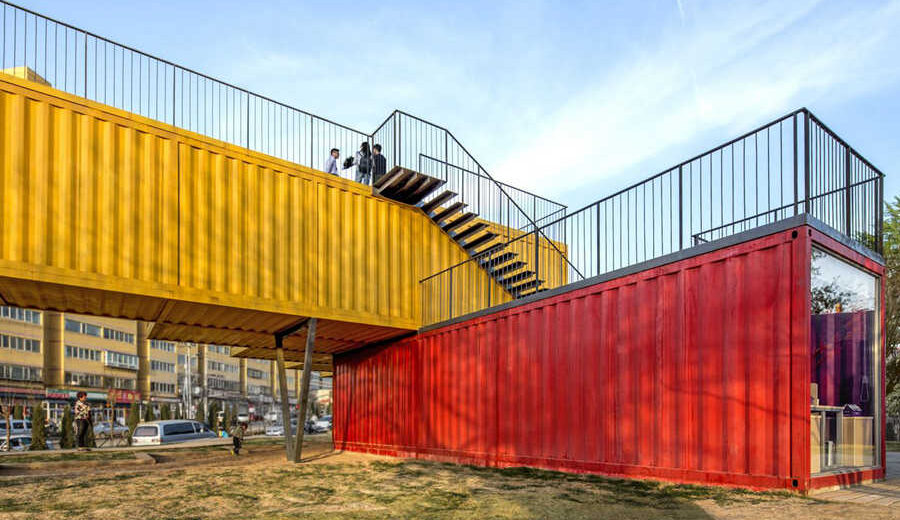
The Fortress Gene: Why a Shipping Container is the Ideal Starting Point
To understand how to build a hurricane-proof home, we must first appreciate the inherent strengths of its core component. A container home isn’t just a box; it’s an engineering marvel.
- A Monolithic Steel Shell: container home are constructed from high-tensile Corten steel, an alloy designed to resist corrosion and extreme stress. The corrugated walls, heavy-gauge steel frame, and cast-steel corner fittings form a single, rigid structure known as a monocoque shell, which distributes forces across its entire surface.
- Engineered for Chaos: They are built to strict international ISO standards, designed to be stacked nine units high and carry over 60,000 pounds while enduring the violent, dynamic forces of a ship pitching in a stormy sea. The wind and water forces they are designed to handle are immense.
- Sheer Mass: A standard 40-foot container weighs over 8,000 pounds (approx. 3,600 kg) empty. This substantial weight provides a powerful natural defense against being shifted or lifted by high winds.
This built-in resilience is an incredible head start. But the moment you decide to turn it into a home, you must address its greatest vulnerability.
The Achilles’ Heel: How Modifications Can Weaken the Structure
The container home’s immense strength is derived from its sealed, unbroken form. The very first cut for a window or a door compromises this perfect system. This is the central challenge: every modification is a calculated risk that must be mitigated with superior engineering. The more you cut, the more you must reinforce.
Without a deep understanding of load paths and structural integrity, these openings can create weak points, making the container susceptible to twisting, racking, or even peeling apart under the immense and fluctuating pressures of a hurricane.
Step 1: The Unbreakable Link – Foundation and Anchoring
A house is only as strong as its connection to the ground. In a hurricane zone, your foundation is not just a base; it is an anchor. Your primary objective is to ensure that no amount of wind force can lift, slide, or flip the structure.
To guarantee this stability, your container home must be permanently secured to an expertly engineered foundation.
- Monolithic Concrete Slab: This is a top-tier choice for hurricane zones. A thick, steel-reinforced concrete slab is poured, with heavy-duty steel plates embedded in the precise locations where the container home’s corner castings will rest. The container is then lowered onto these plates and welded directly to them, creating a single, unified structure with the ground itself.
- Elevated Pier Foundation: In coastal areas prone to storm surges, building codes often mandate that homes be elevated. The containers are placed on tall, robust concrete or steel piers (pylons) that are sunk deep into the ground. The connection is then made by welding or bolting the container’s base to steel plates atop these piers.
- Helical Anchors/Earth Penetrators: These are large, screw-like anchors that are mechanically twisted deep into the soil. Heavy-duty straps or steel cables are then used to tie the container down to these anchors. While effective, this is often seen as a solution for more temporary structures.
Expert Insight: For maximum security in a hurricane-prone area, a professionally engineered, steel-reinforced concrete foundation with direct welding at the corner castings is the gold standard. This method, expertly executed by teams like Svoltex, ensures that the immense wind loads are safely transferred from the container, through the welds, and into the mass of the earth.
Step 2: Armoring the Vulnerabilities – Hurricane-Rated Windows and Doors
Your windows and doors are the most critical points of failure in any home during a hurricane. They face a dual threat: the crushing force of the wind pressure and, more dangerously, the impact from flying debris—which can turn simple tree branches into high-velocity projectiles.
Impact-resistant, hurricane-rated windows and doors are not optional; they are an absolute necessity.
- Laminated Impact Glass: Unlike normal glass, this is a sandwich of two glass panes bonded with a tough, clear polymer interlayer. When struck by debris, the outer glass may shatter, but the interlayer holds the fragments together, maintaining the seal of the home and preventing a breach. This is crucial because once the wind gets inside, the pressure can build up and blow the roof off from within.
- Structurally Reinforced Frames: The window and door frames are as important as the glass. They are typically made from heavy-duty, steel-reinforced aluminum or vinyl, engineered to resist warping and being ripped from the wall under extreme pressure.
- The Gold Standard: Miami-Dade Certification: The “Miami-Dade HVHZ” (High-Velocity Hurricane Zone) approval is the most rigorous testing standard on the planet for windows and doors. Products carrying this certification have been tested to withstand extreme pressures and impacts. Insisting on this standard, which is referenced in FEMA guidelines, is your best guarantee of performance.
Step 3: Rebuilding the Skeleton – Reinforcement and Insulation
Every time you cut a hole in a container, you must meticulously weld a new steel skeleton in its place.
- Welded Steel Tubing Frames: It is absolutely essential to weld a frame of heavy-gauge rectangular steel tubing into every single opening. This isn’t just trim; this is a new structural component that replaces the load-bearing capacity of the corrugated steel that was removed. It channels the forces around the opening, ensuring the container’s shell remains rigid and strong.
- The Supportive Role of Insulation: While insulation’s main purpose is thermal, high-quality closed-cell spray foam insulation can add a secondary layer of defense. It applies as a liquid and hardens into a rigid solid, adhering directly to the steel wall. This process bonds the interior framing to the container skin, adding a degree of rigidity and helping to dampen vibrations and resist denting from smaller debris.
Step 4: Locking It All Down – The Power of Straps and Ties
Even with a perfect foundation and armored windows, you can add further layers of security with specialized hardware designed to resist the unique forces of a hurricane.
- Securing Cargo Doors with Hurricane Straps: If your design cleverly incorporates the original cargo doors, they must be secured. Simple but powerful steel hurricane straps can be installed to clamp the doors tightly shut, preventing them from being torn open by the wind.
- Resisting Uplift with Structural Ties: In complex multi-container or two-story designs, an engineer will specify a system of steel straps and ties. These connectors create robust links between container modules, between the walls and the roof, and between the roof and the foundation, ensuring the entire structure is tied together and can resist the powerful “uplift” forces that try to tear a roof off.
Step 5: Assembling Your Expert Team – The Non-Negotiable Step
Building a home to survive a hurricane is a science. It is not a place for guesswork or DIY shortcuts. The single most important investment in your safety is hiring qualified, local professionals.
- A Structural Engineer: This is your most critical partner. They will analyze your specific location’s wind load requirements, design your foundation and anchoring system, and provide the detailed plans for the steel reinforcement around every opening. Their stamp of approval is your assurance of safety.
- Your Local Building Department: Engage with your local building inspector from the very beginning. They are your ally in ensuring your home is built to the latest safety codes, which are written based on hard-won lessons from past storms. Adhering to standards from bodies like the International Code Council (ICC) isn’t about red tape; it’s about building a home that will still be standing when the storm passes.
Conclusion: A Fortress Built by Design
A shipping container home is not born hurricane-proof, but it can be masterfully built to be one of the most resilient forms of housing available. By committing to an uncompromising approach founded on these five pillars—an unbreakable foundation, armored openings, robust steel reinforcement, strategic hardware, and expert engineering—you can create more than a home. You can build a fortress.
By taking these essential precautions, you can fully embrace the unique style and sustainable benefits of container living, confident in the knowledge that you have provided the safest possible shelter for you and your family.
Frequently Asked Questions (FAQ)
Q1: What is the maximum wind speed a properly constructed container home can endure? A: When professionally engineered and anchored to a suitable foundation, a shipping container home can be designed to withstand the winds of a Category 5 hurricane, which are 157 mph (252 km/h) or greater. The exact wind load rating is determined by the specific engineering and must comply with local building codes.
Q2: Are shipping container homes approved by FEMA? A: FEMA does not “approve” or endorse specific construction methods. However, they publish extensive guidelines for resilient construction in hazard-prone areas. A container home that is designed by a licensed engineer and built to exceed local hurricane codes will align perfectly with FEMA’s principles for disaster-resistant housing.
Q3: How much does it cost to make a container home hurricane-proof? A: The necessary safety enhancements represent a significant but vital investment. The primary costs include a more robust foundation, the substantial price difference for hurricane-rated windows and doors over standard units, and the skilled labor and materials for welding steel reinforcements. While these costs vary, they are a necessary and often legally.