In the chaotic hours following a natural disaster, the clock is a relentless enemy. A hurricane’s roar fades, leaving behind a landscape of devastation. An earthquake’s tremor stills, revealing communities shattered. In these critical moments, the most urgent human need is shelter—a safe space to shield families from the elements, to treat the injured, and to begin the long road to recovery.
Traditional relief efforts, while heroic, often struggle against logistical bottlenecks. Tents offer minimal protection, and constructing temporary wooden structures takes precious time and resources. The need for a swift, efficient, and dignified housing solution has never been more critical.
This is where innovation meets necessity. At Svoltex, we are at the forefront of a housing revolution with a solution perfectly engineered for crisis: folding container homes.
Recently, our work caught the attention of a governmental convention focused on disaster relief suppliers. This conversation highlighted a monumental shift in strategy, underscored by FEMA’s significant $530 million budget for these efforts. This outreach is a clear signal: the world’s leading emergency management agencies are recognizing that folding container homes are a vital, game-changing resource. As we prepare for this crucial conference, we want to share exactly how these structures are poised to redefine disaster response.
The Core Problem with Traditional Disaster Housing
For decades, the standard response has involved tent cities and, later, trailer homes. While serving a purpose, both have significant drawbacks. Tents offer poor security and insulation, leaving vulnerable populations exposed. Trailers, as seen in the aftermath of events like Hurricane Katrina, are notoriously slow to deploy, require extensive site preparation, and create logistical nightmares. The challenges in providing timely and adequate post-disaster housing have been well-documented by research organizations, highlighting the need for a better way.
Folding container homes directly address these historical failures, offering a trifecta of speed, durability, and versatility that legacy solutions simply cannot match.
1. Speed and Simplicity: The Power of Rapid Deployment
When a disaster strikes, the first 72 hours are critical. The ability to deploy shelter quickly can literally save lives. Our folding container homes are engineered for this exact scenario.
From Flat-Pack to Functional Home in Hours
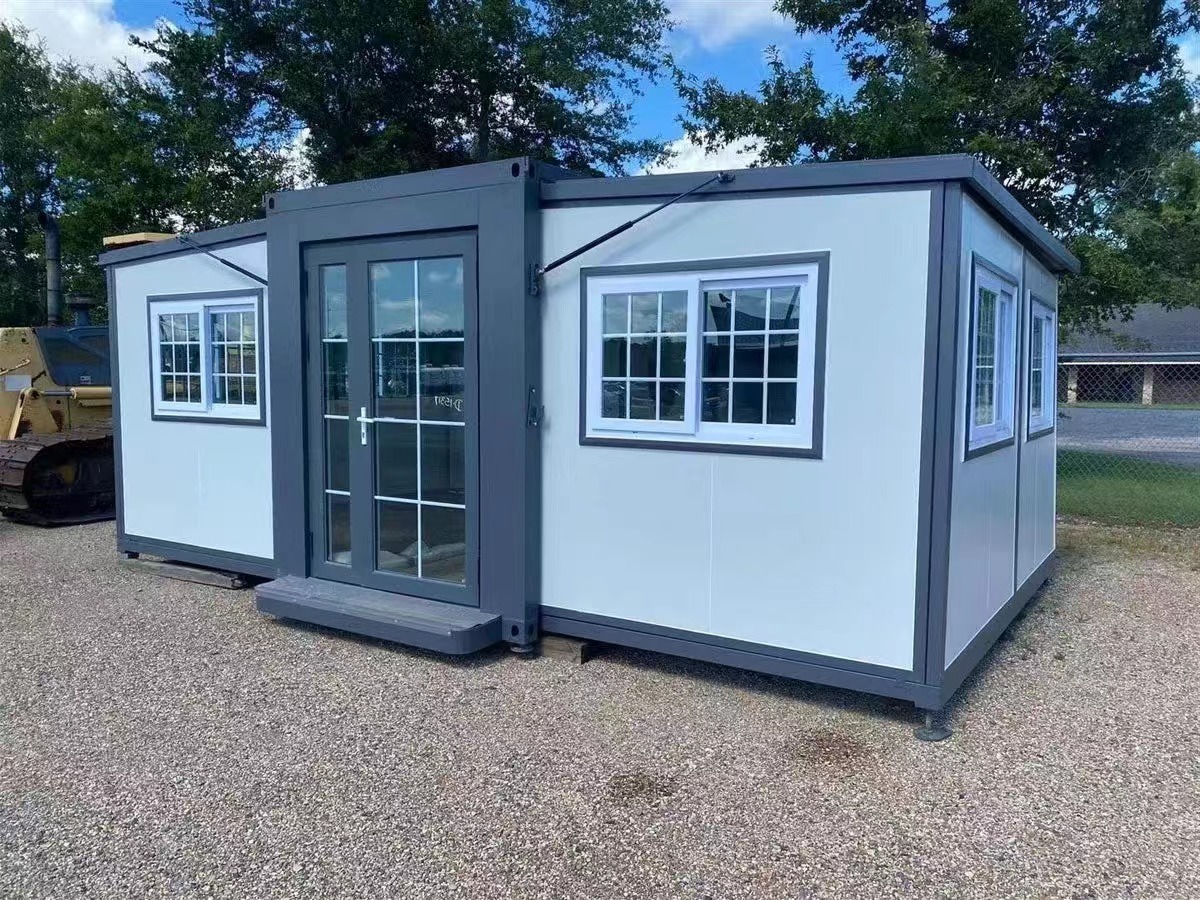
Unlike traditional containers that require cranes and heavy machinery for placement, our folding units are transported in a collapsed, flat-pack form. This ingenious design means a single truck can carry multiple homes, drastically reducing transportation costs and logistical complexity.
Upon arrival at the disaster zone, a small team with basic tools can unfold and assemble a unit in a matter of hours, not days or weeks. This process involves:
- Lifting the roof structure.
- Unfolding the durable wall panels.
- Securing the sections in place.
This “ready-made” approach eliminates the need for complex construction on-site, allowing relief workers to focus on what matters most: helping people.
2. Unmatched Versatility: A Multi-Tool for Crisis Management
A disaster zone is a dynamic environment with a multitude of needs that evolve by the hour. A single, rigid solution is inefficient. The true power of folding container homes lies in their incredible adaptability. They are the Swiss Army knife of disaster relief housing.
Key Applications in a Disaster Zone:
- Temporary Emergency Shelters: This is their primary role. They provide safe, lockable, and weatherproof housing for displaced individuals and families, offering a level of security and dignity that a tent cannot. Multiple units can be arranged to create a structured, community feel.
- Portable Medical Clinics: In the aftermath of a disaster, medical infrastructure is often compromised. These units can be instantly converted into clean, secure, and climate-controlled field clinics for triage, first aid, and basic medical treatments.
- Command and Security Stations: Establishing order is paramount. A folding container home can serve as a central command post for coordinating relief efforts or as a security checkpoint to ensure the safety of the affected area.
- Secure Supply Storage: Essential supplies like food, clean water, and medical equipment are the lifeblood of any relief operation. These steel structures provide secure, weatherproof storage, protecting vital assets from the elements and theft.
- Housing for Relief Workers: The tireless first responders, volunteers, and medical staff from organizations like the American Red Cross also need a safe place to rest and recuperate. Deploying these units for personnel ensures they remain effective and avoids further straining local resources.
This multi-purpose capability makes folding container homes an invaluable and efficient asset for any emergency management agency.
3. Engineered for Survival: Durability in Harsh Conditions
Disaster zones are, by definition, unforgiving environments. They demand structures that can withstand extreme weather, rough terrain, and the general chaos of a crisis. Our folding container homes are built from robust, high-quality steel and insulated panels.
They are designed to be:
- Weather-Resistant: Capable of protecting occupants from heavy rain, high winds, and extreme temperatures.
- Structurally Sound: Built on the proven strength of a steel container frame, ensuring stability and safety.
- Durable for Long-Term Use: While they are ideal for rapid deployment, these homes are not a flimsy, short-term fix. They can serve as reliable housing for months or even years if the recovery process is prolonged.
4. Cost-Effectiveness and Scalability: Maximizing Impact
With a finite budget, every dollar counts. The design of folding container homes provides significant cost savings throughout the entire logistics chain.
The flat-pack transportation model dramatically lowers shipping costs. The ease of setup reduces labor costs. The durability minimizes maintenance and replacement costs. This efficiency allows organizations like FEMA to stretch their $530 million budget further, helping more people with the same amount of funding.
Furthermore, the scalability is seamless. Need a 10-person shelter? Deploy one unit. Need to house a hundred families? Deploy a hundred units. Need a larger medical facility? Multiple units can be interconnected to create larger, more complex structures. This modularity ensures that the response can be precisely tailored to the scale of the disaster.
Conclusion: A New Era in Disaster Response
The challenges of our time, from climate change-fueled superstorms to seismic events, demand a more agile, effective, and humane approach to disaster relief. The era of slow, inefficient, and inadequate temporary housing must end.
At Svoltex, we are committed to being a pivotal part of this new era. Our folding container homes offer a proven, ready-made solution that delivers on the critical needs of speed, versatility, durability, and cost-effectiveness. As we prepare to engage with FEMA and other governmental bodies, our message is clear: the future of disaster relief housing is here, and it’s ready to be deployed.
Take Action for Your Organization
Are you part of a municipal, state, or federal agency? Do you work with an NGO involved in disaster relief? If you are looking for a reliable, scalable, and immediate housing solution, the time to plan is now.
Contact us today at Svoltex to learn more about how our folding container homes can be integrated into your emergency response strategy. Let’s work together to build a more resilient future.
Frequently Asked Questions (FAQs)
Q1: Why are folding container homes superior to tents for disaster relief? Folding container homes provide vastly superior protection from the elements, security with lockable doors and windows, and a more dignified living environment. They are durable, reusable, and can be equipped with amenities like electricity and plumbing, making them a true temporary housing solution, not just basic shelter.
Q2: What is a folding container home made of? They are constructed with a high-strength steel frame and insulated wall panels. This makes them both lightweight enough for easy transport and robust enough to withstand harsh weather conditions, providing a safe and secure environment in a disaster zone.
Q3: How quickly can folding container homes be deployed in a disaster? Their primary advantage is speed. A single unit can be assembled by a small team in just a few hours. Because they are transported as flat-packs, multiple units can be shipped on one truck, enabling the rapid establishment of entire temporary communities.
Q4: What are the most critical uses for folding container homes in disaster relief? While they are excellent for temporary shelters, their versatility allows them to be used as portable medical clinics, command centers for relief operations, secure storage for supplies, and housing for first responders, making them a multi-faceted tool for crisis management.
Q5: Are folding container homes durable enough for long-term use in disaster zones? Absolutely. They are built from robust materials designed to endure harsh conditions. Unlike tents, they provide a reliable and secure solution that can last for the many months or even years that a full recovery effort can take.
Q6: How can my organization partner with Svoltex for disaster relief planning? We work with organizations to create pre-disaster plans. Visit our website or contact us directly to discuss your specific needs, from stockpiling units to developing rapid deployment protocols. Proactive planning is key to an effective response.