From the sprawling urban landscape of Chicago to the rolling fields of its rural heartland, Illinois presents a unique set of challenges and opportunities for aspiring homeowners. The dream of building a home here often collides with the reality of high construction costs, a demanding four-season climate, and a desire for more sustainable and resilient living. In response to these pressures, a groundbreaking architectural movement is gaining serious momentum across the state: container homes in Illinois.
No longer a niche concept, these innovative homes, crafted from industrial-strength shipping containers, are emerging as a smart, practical, and stylish solution. They directly address the core concerns of Illinois residents by offering a powerful blend of affordability, extreme durability, rapid construction, and modern design flexibility.
This in-depth guide will explore the specific reasons behind the rise of container homes in Illinois. We will analyze the significant cost advantages, their surprising suitability for cold climates, the evolving landscape of local building codes and zoning laws, and the success stories of those who have already embraced this forward-thinking approach to building a life in the Prairie State.
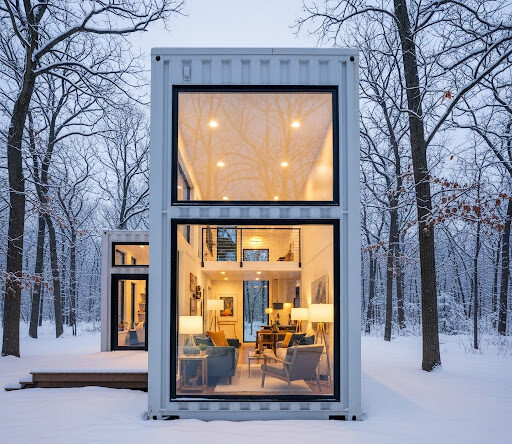
The Unmistakable Appeal: Why Choose a Container Home in Illinois?
The growing excitement around container homes isn’t just about their unique look; it’s rooted in tangible benefits that solve real-world problems for those wanting to build in Illinois.
1. A Powerful Answer to Housing Affordability
In both the Chicago metropolitan area and developing rural communities, the cost of traditional construction can be a major barrier to homeownership. Lumber prices, labor shortages, and lengthy project timelines can quickly inflate the budget of a conventional stick-built home. Container homes offer a compelling and cost-effective alternative.
The savings come from several key areas:
- Lower Structural Costs: The primary structure of the home—the Corten steel container—is already built and is significantly less expensive than building a foundation and frame from scratch with traditional materials.
- Efficient Factory Construction: A large portion of the build, from welding and framing to insulation and initial utility rough-ins, is completed off-site in a climate-controlled factory. This modular process is faster, produces less waste, and reduces the high cost of on-site labor.
- Predictable Budgeting: With a streamlined factory build, there are fewer variables and unexpected delays. This allows for a much more stable and predictable budget, protecting buyers from the cost overruns that are common in traditional construction.
For many Illinois residents, the lower overall project cost of a container home is the deciding factor, turning the dream of building a custom home into an achievable reality.
2. Surprising Strength and Durability for the Midwest Climate
A common question is: “Can a metal box really be comfortable during an Illinois winter?” The answer is a resounding yes, and in many ways, they are superior. The key is in modern insulation technology.
Container homes are not left as single-walled steel structures. They are treated with high-performance closed-cell spray foam insulation. This type of insulation creates a complete, airtight thermal break, forming a seamless vapor and air barrier. This has two major benefits for the Illinois climate:
- Exceptional Heat Retention: In winter, the insulation prevents cold from penetrating the steel and, more importantly, keeps the heat generated inside from escaping. A well-insulated container home can be incredibly cozy and energy-efficient, even during sub-zero temperatures.
- Moisture and Condensation Control: The seamless vapor barrier created by closed-cell spray foam prevents the formation of condensation on the interior of the steel walls—a critical factor for preventing moisture issues and ensuring long-term durability.
Beyond insulation, the inherent structure of a shipping container is incredibly robust. Made from corrosion-resistant Corten steel and designed to be stacked nine-high while carrying tens of thousands of pounds, they can easily handle the heavy snow loads common in an Illinois winter. Their all-steel construction also makes them impervious to pests like termites and resistant to rot.
3. Unmatched Speed of Construction
The traditional home-building process is notoriously slow and subject to delays from weather, subcontractor schedules, and material delivery issues. Building during the often-unpredictable Illinois spring or fall can be especially challenging. Container homes offer a revolutionary advantage in speed.
This speed is achieved through parallel processing. While your building site is being excavated and the foundation is being poured, your home’s modules are being simultaneously fabricated in a factory, unaffected by rain, snow, or mud. Once the site is ready, the finished modules are transported, set in place by a crane, and sealed in a matter of days. The final on-site work is minimal. This process can shrink the entire construction timeline from over a year to just a few months.
4. Sustainable Building and Modern Design Flexibility
For a growing number of homeowners, environmental impact is a key consideration. Container homes are an inherently sustainable choice.
- Upcycling: By repurposing a used shipping container, you are giving a new life to thousands of pounds of steel, which is a far more eco-friendly option than melting it down or letting it rust away.
- Reduced Waste: The factory-controlled building process generates significantly less on-site construction waste compared to a traditional build.
From a design perspective, the modular nature of containers offers incredible flexibility. Whether you envision a rustic cabin in the woods of Southern Illinois, a sleek modern farmhouse on the prairie, or a chic multi-unit urban dwelling in a Chicago suburb, containers can be adapted to fit your vision. They can be combined, stacked, and clad in a variety of materials—from wood and brick to stucco and metal siding—to achieve any desired aesthetic.
Navigating the Rules: Illinois Building Codes and Zoning
Building any home requires navigating a web of local regulations. While Illinois does not have a statewide code specifically for container homes, they are legal to build, provided they are designed and constructed to meet all existing state and local building codes that apply to traditional residential construction.
Key considerations include:
- Local Zoning Ordinances: Before you even begin designing, you must check with your local city or county’s zoning department. They will have rules about minimum house sizes, aesthetic requirements, and what types of structures are permitted. Some municipalities, particularly in more rural areas, are very open to container homes, while some suburban areas may have stricter covenants.
- Permitting: You will need to submit a full set of architectural and engineering plans for a building permit. These plans must be signed and sealed by an Illinois-licensed architect and/or structural engineer. The plans must demonstrate how the container will be modified (e.g., cutting windows and doors), insulated, and finished to meet all safety, structural, and energy efficiency codes.
- Foundation: The plans must specify a robust foundation engineered for Illinois’s frost depth and soil conditions to properly anchor the home.
Working with an experienced builder like svoltex is critical. We have the expertise to provide the necessary engineered plans and navigate the permitting process, ensuring your home is fully compliant and built to last. For general information, the International Code Council (ICC) provides the basis for most local building codes.
Illinois Success Stories: From City to Countryside
The container home movement is not just a theory; it’s a reality taking shape across Illinois.
- The Chicago Suburb ADU: A family in a suburb like Naperville or Schaumburg adds a single-container Accessory Dwelling Unit (ADU) to their backyard, creating a stylish home office and guest suite that adds significant value to their property.
- The Downstate Retreat: Near a natural area like the Shawnee National Forest, a couple builds a rustic, off-grid-capable cabin from two containers, creating a durable, low-maintenance weekend escape.
- The Peoria Infill Project: A developer in a city like Peoria or Rockford utilizes a narrow urban lot, previously considered unbuildable, to construct a modern, multi-story container home, providing a unique and affordable housing option in the city center.
Conclusion: A Smarter Way to Build in the Prairie State
Container homes in Illinois offer a compelling, intelligent, and resilient solution to the challenges of building in the Midwest. They provide a clear path to affordable homeownership, exceptional performance in a four-season climate, and the flexibility to create a home that is uniquely yours.
Whether you are a first-time homebuyer looking to escape the rent cycle, an investor seeking innovative projects, or a family wanting to build a custom home with a focus on sustainability and design, the container home movement offers a durable and inspiring path forward.
Shop svoltex
Ready to explore the benefits of container homes for your new Illinois home? Shop svoltex to discover our range of customizable, durable, and affordable container homes designed to thrive in the Midwest climate. Our team of experts is here to ensure you get the best value and support. Shop now and build your dream with confidence!
Frequently Asked Questions (FAQs)
| Question | Answer |
|---|---|
| Are container homes warm enough for Illinois winters? | Yes, absolutely. When properly insulated with modern closed-cell spray foam, container homes can be exceptionally warm and energy-efficient. The insulation creates an airtight seal that prevents cold intrusion and heat loss, making them very comfortable even in sub-zero temperatures. |
| Is it legal to build a container home in Illinois? | Yes. There is no state law prohibiting them. However, you must comply with all local zoning ordinances and state/local building codes, just like any other residential construction. This requires submitting professional, engineered plans for a building permit. |
| How do container homes handle snow loads? | Extremely well. They are structurally engineered to be stacked nine units high while full of heavy cargo. The weight of even the heaviest Illinois snow load is negligible compared to what the Corten steel structure is designed to handle. |
| What is the cost of a container home vs. a traditional home in Illinois? | A container home is generally more affordable. The savings come from lower structural material costs, reduced labor due to factory construction, and a much shorter and more predictable project timeline, which minimizes cost overruns. |
| How do I get a permit for a container home? | You must work with an architect and/or structural engineer licensed in Illinois to create a full set of plans. These plans are then submitted to your local city or county building department for review and approval before any construction can begin. |
| What kind of foundation do I need in Illinois? | You will need a foundation that extends below the local frost line to prevent heaving. Common options include a concrete slab-on-grade with deepened footers, a full basement, or a crawl space, all of which must be designed by an engineer for your specific site. |
| Can I customize the look of my container home? | Yes, completely. The steel shell is a blank canvas. It can be painted any color or clad in a wide variety of materials like wood, brick veneer, stone, or stucco to match any architectural style, from rustic to ultra-modern. |
| What is the resale value of a container home? | As container homes become more popular and understood, the resale value of well-built, legally permitted homes is proving to be strong. Their durability, unique modern aesthetic, and low maintenance make them an attractive and valuable asset to future buyers. |