The world of education is in a constant state of flux. Curricula evolve, teaching methodologies shift, and student populations grow, placing relentless pressure on our physical learning infrastructure. School districts and corporate training departments alike face a common, critical challenge: how to provide high-quality, effective learning environments that are flexible, scalable, and financially viable.
For decades, the answer was traditional “brick-and-mortar” construction—a process known for being slow, expensive, and disruptive. But in the face of today’s dynamic educational needs, this old model is proving inadequate. A new solution is emerging, one born from ingenuity, sustainability, and industrial strength: container classrooms.
Once relegated to residential concepts, the potential of repurposed shipping containers as sophisticated, high-tech educational spaces is now being realized globally. From rapidly expanding elementary schools to specialized corporate training centers, container classrooms offer a compelling and practical answer to the urgent demand for modern, adaptable learning spaces.
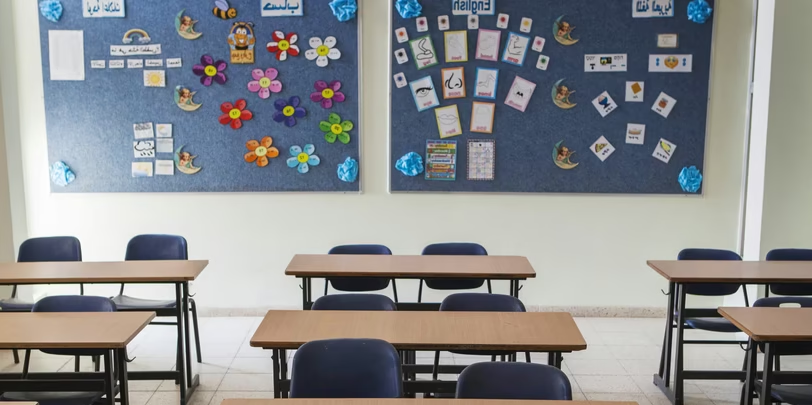
The Core Challenges with Traditional Educational Construction
Before diving into the benefits of modular container construction, it’s essential to understand the limitations of the conventional approach that have made innovation so necessary.
- Prohibitive Costs: The price of new school construction is staggering. Materials, labor, and land acquisition can run into the tens of millions, placing an immense burden on public funds and corporate budgets.
- Lengthy Timelines: A new school wing or training facility can take years to move from conception to completion, a timeline that often can’t keep pace with immediate enrollment pressures or urgent training needs.
- Significant Disruption: On-site construction is inherently disruptive to the learning environment, creating noise, dust, and safety concerns for months on end.
- Inflexibility: A concrete building is permanent and rigid. It cannot be easily moved, reconfigured, or expanded without another round of costly and time-consuming construction.
These challenges have created a critical need for a smarter, more agile approach to building our future learning spaces.
The Definitive Benefits of Container Classrooms and Training Centers
Container-based construction directly addresses the shortcomings of traditional methods, offering a suite of advantages that make it an ideal choice for the modern education sector.
1. Unprecedented Flexibility and Adaptability
The single greatest advantage of container classrooms is their modularity. These are not one-size-fits-all boxes; they are highly customizable building blocks.
- Tailored Internal Layouts: The interior can be designed to support any educational function, from a traditional 30-student classroom to a collaborative STEM lab, a quiet special education resource room, or a high-tech corporate simulation center.
- Easy Reconfiguration and Expansion: As an institution’s needs evolve, container spaces can be easily modified. Need to expand? Simply add another module. Need to change the layout? Interior walls can be moved. This adaptability ensures the learning space remains relevant and effective for years to come.
2. Radical Speed of Deployment
In situations where time is of the essence—such as accommodating a sudden influx of students or launching a new training program—speed is paramount.
- Off-Site Prefabrication: The majority of construction, including framing, insulation, electrical, and plumbing, is completed off-site in a controlled factory setting.
- Minimal On-Site Disruption: The finished modules are then transported to the location for final assembly and connection to utilities. This process reduces on-site construction time from years or months to a matter of weeks or even days, minimizing disruption to students and staff.
3. A Truly Cost-Effective Solution
In a sector often constrained by tight budgets, container classrooms offer significant financial relief.
- Lower Material and Labor Costs: Repurposing a shipping container is inherently cheaper than building a structure from the ground up. The efficiencies of factory production also reduce labor costs.
- Budget Certainty: The controlled nature of prefabrication leads to more accurate cost forecasting and fewer unexpected budget overruns.
- Resource Reallocation: The substantial savings can be reinvested where they matter most: into better technology, more educational materials, teacher development, or smaller class sizes.
4. A Powerful Statement in Sustainability
Modern educational institutions are expected to be leaders in environmental responsibility. Container classrooms are an inherently green building solution.
- Upcycling and Waste Reduction: They give a new, long-term purpose to used shipping containers, saving thousands of pounds of steel from the waste stream. This is a prime example of upcycling, a key principle of the circular economy.
- Energy Efficiency: These spaces can be engineered with cutting-edge green technology, including high-R-value insulation, energy-efficient windows, LED lighting, and solar panel arrays, dramatically reducing their operational carbon footprint and utility costs. As noted by sustainability initiatives like the World Green Building Council, school buildings represent a major opportunity for energy savings.
5. Superior Durability and Safety
Built from corten steel, shipping containers are designed to be incredibly robust. They are engineered to withstand the extreme conditions of international shipping, making them a safe and durable choice for any environment. They are resistant to fire, pests, and extreme weather, providing a secure and comfortable learning space for students and trainees.
Practical Applications for Modular Learning Spaces
The versatility of container classrooms makes them suitable for an almost limitless range of educational applications.
- Rapidly Deployable Classrooms: For schools facing overcrowding, container modules are the perfect solution for quickly adding high-quality classroom space without the disruption of a major construction project.
- Specialized Training Centers: Corporations can use container structures to create dedicated, on-site training facilities for technical skills, safety protocols (e.g., confined space simulators), or leadership development. These can be easily relocated between different corporate campuses as needed.
- STEM Labs and Makerspaces: The open, customizable layout is ideal for creating hands-on learning environments like science labs, robotics workshops, or art studios that require specific equipment and infrastructure.
- Remote and Outdoor Education Hubs: For educational programs in remote or rural areas where traditional construction is not feasible, a self-contained container classroom can provide a fully functional, climate-controlled learning hub.
- Temporary Facilities During Renovations: When a school is undergoing a major renovation, container classrooms can serve as high-quality “swing space,” ensuring educational continuity without forcing students into subpar temporary trailers.
Conclusion: Building the Future of Education, One Module at a Time
The way we learn is becoming more dynamic, personalized, and technology-driven. The spaces where this learning happens must evolve as well. Container classrooms are not just a temporary fix or a low-cost alternative; they are a forward-thinking, strategic solution that offers the flexibility, speed, affordability, and sustainability that the 21st-century education sector demands.
By embracing this innovative approach, schools and organizations can create inspiring, effective, and resilient learning environments that are ready to meet the challenges of today and the opportunities of tomorrow.
Build Your Innovative Learning Space
Interested in exploring how container solutions can transform your educational or training facilities? Visit Svoltex to learn more about our fully customizable container structures. Whether you need to expand your school, create a specialized corporate training center, or develop a remote learning facility, we have the perfect solution to meet your needs. Start building the future of education today!
Frequently Asked Questions (FAQs)
Q1: Are container classrooms safe and comfortable for students? Absolutely. When properly insulated and finished, they are indistinguishable from traditional classrooms. They are equipped with modern HVAC systems for climate control, meet all fire and safety codes, and provide a secure, comfortable, and quiet learning environment.
Q2: How quickly can a container classroom be operational? From order to installation, the process can often be completed in a few months, with on-site setup taking only a matter of days or weeks. This is a fraction of the time required for traditional construction.
Q3: Are container classrooms a cost-effective choice for schools? Yes. They are significantly more affordable than building a new permanent structure. The savings in materials, labor, and time allow educational institutions to allocate their limited budgets more efficiently.
Q4: Can container classrooms be used in very hot or very cold climates? Definitely. The key is proper insulation. High-quality spray foam or panel insulation is used to create a highly efficient thermal envelope, ensuring the interior remains comfortable year-round, regardless of the external climate.
Q5: What level of customization is available for container classrooms? The customization options are virtually limitless. They can be designed with specific window and door placements, internal layouts, specialized electrical and data ports for technology, durable flooring, and integrated storage solutions to meet the exact needs of any educational program.