
Nevada is a land of breathtaking contrasts. From the sun-scorched, vibrant landscapes of the Mojave Desert to the serene, snow-dusted peaks of the Great Basin, the Silver State’s beauty is wild and untamed. But this rugged beauty comes with a demanding climate, presenting one of the most significant challenges for homebuilders in the nation. With summer temperatures soaring past 100°F and winter nights plunging below freezing, a home in Nevada must be more than a shelter; it must be a fortress of comfort, a bastion of energy efficiency, and a testament to durability.
For those seeking a modern, resilient, and sustainable housing solution, durable container homes in Nevada are emerging as the definitive answer. These structures, born from the industrial strength of global shipping, offer a unique combination of inherent toughness and architectural flexibility. But how do you transform a simple steel box into a comfortable oasis that can withstand both searing heat and biting cold?
This is your ultimate guide to engineering the perfect container home for Nevada’s weather. We will delve deep into the science of insulation, explore the critical role of R-values, and uncover the advanced construction techniques that make these homes not just viable, but truly superior for life in this state of extremes. Whether you’re in the bustling heart of Las Vegas or the quiet plains of Elko, get ready to discover how to build a home that offers year-round comfort and unparalleled energy efficiency.
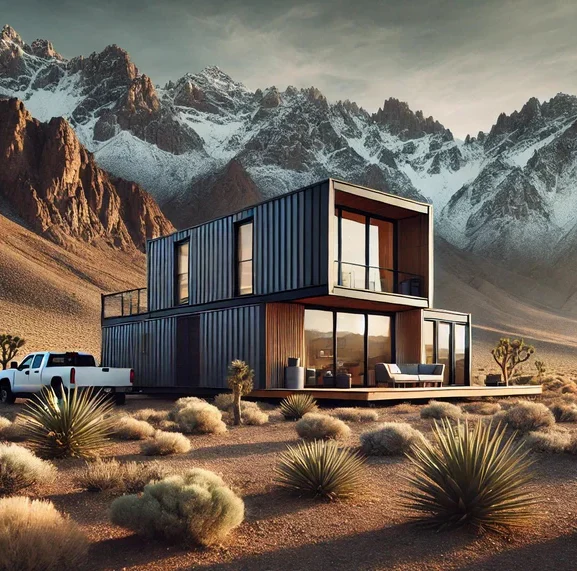
The Nevada Climate Conundrum: More Than Just Heat
To build a home that can conquer Nevada’s climate, you must first understand the full scope of the challenge. The state’s weather is complex and varies dramatically by region, demanding a nuanced approach to construction.
A State of Two Climates
- Southern Nevada (Mojave Desert): This region, including Las Vegas, is defined by its long, intensely hot summers. Temperatures frequently exceed 100°F (38°C), with scorching UV radiation that can degrade building materials over time. Winters are generally mild, but temperatures can still drop near freezing. The primary challenge here is mitigating heat gain and ensuring a cool, comfortable interior without astronomical energy bills.
- Northern Nevada (Great Basin): Characterized by a high-desert climate, this region experiences a much wider temperature swing. While summers are hot and dry, winters are cold and can bring significant snowfall and prolonged freezing periods. In areas like Reno and Elko, a home must be able to retain heat effectively in the winter while still being able to handle summer heatwaves.
According to the National Weather Service, this extreme diurnal temperature variation—hot days followed by cool nights—puts constant stress on building materials as they expand and contract. This is where the durability of your home’s structure and the quality of its components become paramount.
Beyond Temperature: The Hidden Challenges
- Intense UV Radiation: The relentless Nevada sun can fade paint, degrade plastics, and damage roofing materials.
- Low Humidity: While low humidity makes the heat feel less oppressive, it can cause wood to dry out and crack.
- High Winds: Many parts of Nevada experience strong, persistent winds, which can test the structural integrity of a home and find any air leaks in the building envelope.
A truly durable container home must be designed to address all these factors, not just the number on the thermometer.
The Science of Comfort: Mastering Insulation in Your Nevada Container Home
The single most important element in creating a comfortable and energy-efficient container home is insulation. A steel container is an excellent conductor of heat, meaning without proper insulation, it will become an oven in the summer and an icebox in the winter.
What is R-Value and Why Does It Matter?
R-value is a measure of a material’s thermal resistance, or its ability to resist the flow of heat. The higher the R-value, the better the insulation. For a state with the temperature extremes of Nevada, achieving the right R-value is not just a recommendation; it’s a necessity for comfort and affordability. The U.S. Department of Energy provides R-value recommendations by climate zone, and most of Nevada falls into zones that require significant insulation for walls, roofs, and floors.
Our Primary Solution: Expanded Polystyrene (EPS) Sandwich Panels
Our container homes are constructed using high-quality Expanded Polystyrene (EPS) sandwich panels as the primary insulation material. These panels consist of a rigid core of EPS foam bonded between two structural skins, creating a single, robust building component.
- EPS Insulation R-Value: Approximately R-3.6 to R-4 per inch.
- Our Panel Thickness:
- Roof and Walls: 75mm (approx. 3 inches)
- Internal Partitions: 50mm (approx. 2 inches)
This translates to impressive R-values for the core structure of our homes:
- Roof and Walls R-Value: R-10.8 to R-12
- Internal Partitions R-Value: R-7.2 to R-8
These values provide a strong thermal barrier, ensuring the home retains heat during cold winters and stays cool during hot summers, leading to significant energy savings. Furthermore, EPS panels are fire-resistant and add to the overall structural integrity of the home.
Comparing Insulation Types for Container Homes
While EPS panels form the core of our designs, it’s helpful to understand the landscape of container home insulation options:
| Insulation Type | Approx. R-Value/Inch | Pros | Cons |
|---|---|---|---|
| EPS Panels | R-3.6 – R-4 | Cost-effective, structurally sound, fire-resistant, easy to install. | Lower R-value per inch than spray foam. |
| Spray Foam | R-6 – R-7 | Highest R-value, creates a perfect air seal, adds structural rigidity. | More expensive, requires professional installation. |
| Mineral Wool | R-3.7 – R-4.2 | Excellent fire resistance, great soundproofing, moisture resistant. | Can be bulky, requires careful sealing of gaps. |
| Rigid Foam Boards | R-4 – R-6.5 | DIY-friendly, high R-value, can be layered. | Seams must be meticulously taped to prevent air leaks. |
For homeowners in Nevada’s most extreme climates, a hybrid approach, such as using our core EPS panels and adding a layer of spray foam, can create an exceptionally high-performance building envelope.
Beyond Insulation: Building a Fortress Against the Elements
A truly durable home relies on more than just good insulation. Every component must work together to create a resilient and efficient system.
The Unbeatable Core: Galvanized Steel Frame
Our container homes are built around a galvanized steel frame. The galvanization process involves coating the steel with a layer of zinc, which provides exceptional protection against rust and corrosion. This frame is integrally welded, creating a monolithic structure that can withstand high winds and the stresses of temperature fluctuations without compromising its integrity.
Windows and Doors: Your View to Efficiency
Windows are a potential weak point for thermal transfer. That’s why we utilize double-layer insulated tempered glass.
- Double-Layer (Dual-Pane): Two panes of glass are separated by a sealed air or gas-filled gap. This gap acts as an insulator, dramatically reducing heat transfer.
- Low-E Coatings: We incorporate Low-Emissivity (Low-E) coatings. These are microscopically thin, transparent coatings that reflect thermal radiation. In the summer, they reflect the sun’s heat out, and in the winter, they reflect your home’s heat back in.
- Tempered Glass: This glass is treated for safety and is much stronger than standard glass, offering better security and resistance to breakage from wind or impact.
Cool Roof Technology: The Secret to Beating the Heat
For Southern Nevada, a “cool roof” is a game-changer. A cool roof is designed to reflect more sunlight and absorb less heat than a standard roof. This is achieved with special reflective paints or roofing materials. According to the Cool Roof Rating Council (CRRC), a cool roof can stay up to 50–60°F cooler than a traditional roof in the summer sun, significantly reducing the energy needed for air conditioning. Our homes can be equipped with cool roof systems to provide the ultimate defense against the desert sun.
Safety First: Fireproof Panels
In a dry climate like Nevada’s, fire safety is a major concern. Our homes are constructed with fireproof and flame-retardant panels, enhancing the safety and security of your investment and, most importantly, your family.
The Benefits of Choosing a Container Home in Nevada
The combination of thoughtful design and advanced materials results in a host of benefits perfectly suited for Nevada living.
- Radical Energy Efficiency: The high R-values, efficient windows, and cool roof options mean your heating and cooling systems don’t have to work as hard. This translates directly to lower monthly utility bills and a more comfortable, stable indoor environment.
- Unmatched Durability: A galvanized, welded steel frame and high-quality components mean your home is built to last, resisting pests, rot, and the harsh Nevada weather with minimal maintenance.
- True Sustainability: By upcycling a shipping container, you are already making an eco-friendly choice. The energy efficiency of the finished home further reduces your carbon footprint for decades to come. Our designs can also easily integrate features like solar panels and rainwater harvesting systems.
- Speed of Construction: Because much of the fabrication happens off-site, the on-site construction time is drastically reduced. This means you can be in your new, high-performance home faster than you ever thought possible.
Conclusion: Your Nevada Oasis Awaits
Living in Nevada means embracing a land of rugged independence and stunning natural beauty. Your home should reflect that spirit. Our durable container homes are not just a housing option; they are a comprehensive, engineered solution specifically designed to thrive in Nevada’s demanding climate.
With a foundation of high-quality insulation, a robust steel structure, and energy-efficient components, these homes offer a sanctuary of comfort, a model of sustainability, and a wise financial investment. They prove that you don’t have to compromise between modern design, affordability, and the resilience needed to live comfortably in one of America’s most beautifully extreme states.
Shop Svoltex
Ready to build your own resilient retreat? Explore the possibilities with Svoltex. We are your premier resource for cutting-edge container homes designed for modern living. Browse our customizable models, find inspiration in our gallery, and access the expertise you need to begin your journey toward a sustainable and durable home in Nevada. Visit our shop today and take the first step.
Frequently Asked Questions (FAQs)
Q: What are the R-values of your container homes? A: The R-values are approximately R-10.8 to R-12 for the roof and exterior walls, and R-7.2 to R-8 for the internal partitions, thanks to our high-quality EPS sandwich panels.
Q: Are these homes truly suitable for both Las Vegas heat and Reno cold? A: Absolutely. The core design is focused on thermal resistance, which works both ways. The insulation keeps heat out in the summer and keeps heat in during the winter, making them ideal for all of Nevada’s climate zones.
Q: What is a ‘cool roof’ and do I really need one in Nevada? A: A cool roof uses reflective materials to absorb less heat from the sun. While beneficial anywhere in Nevada, it is highly recommended for Southern Nevada to significantly cut down on air conditioning costs and improve comfort during the summer months.
Q: How do the homes handle Nevada’s high winds? A: The integrally welded, galvanized steel frame creates an incredibly strong and rigid structure. When properly anchored to a foundation, our container homes are exceptionally resistant to high winds.
Q: Can these homes be customized? A: Yes. Customization is one of the key benefits. We can work with you to adjust layouts, finishes, and features like solar panel integration or specific window placements to meet your exact needs and preferences.
Q: How quickly can a container home be constructed? A: While timelines vary by project complexity, the construction process is significantly faster than traditional building methods, often taking a matter of weeks for fabrication and assembly, not months or years.

