
You’ve sourced the perfect shipping container and have a vision for your modern, innovative home. But before the first steel wall is cut, the most critical decision of your entire project lies beneath your feet. Choosing the right foundation is not just a preliminary step; it is the bedrock of your home’s safety, stability, and longevity.
Across the vast and varied landscapes of the United States, from the expansive clays of the South to the rocky terrain of the Northeast, selecting from the various container home foundations in the USA is a task that demands technical understanding. This definitive guide will walk you through the most suitable foundation types for your container home, ensuring your investment is built on solid ground.
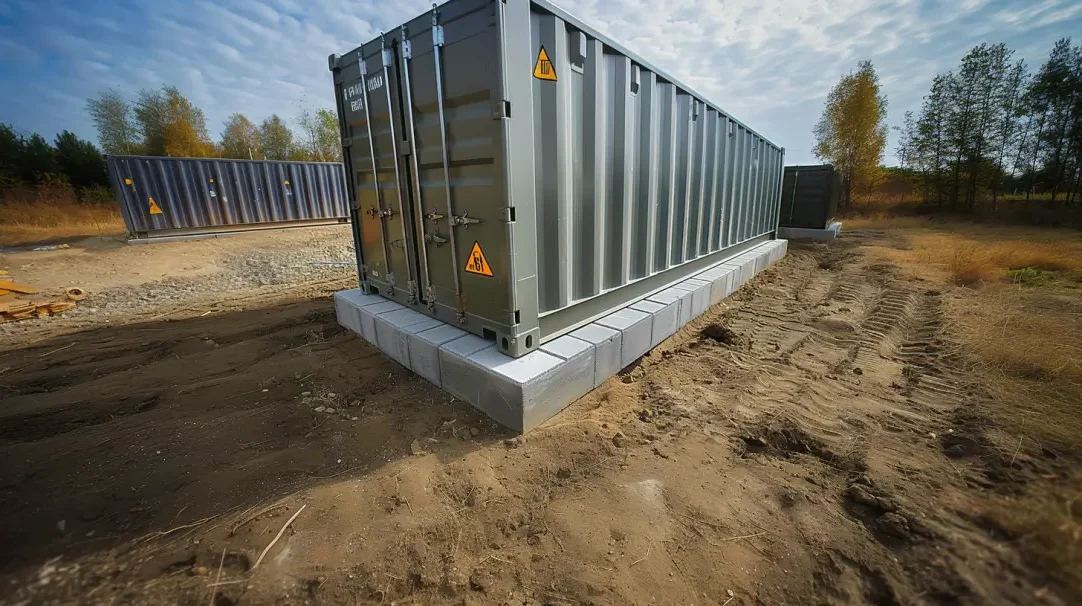
Understanding America’s Ground Realities: Soil, Climate, and the Frost Line
Before digging in, it’s crucial to understand the environment your foundation will inhabit. The United States has an incredibly diverse range of soil and climate conditions that directly impact foundation design.
- Soil Characteristics: Soil can range from stable, load-bearing bedrock to expansive clays that swell when wet and shrink when dry, or sandy soils that can shift. This variability makes a professional soil assessment essential.
- The Frost Line (Frost Depth): In any state where temperatures drop below freezing, the ground will freeze to a certain depth. This is the frost line. Water in the soil expands when it freezes, which can push a poorly designed foundation upwards—a powerful phenomenon called “frost heave.” To prevent this, building codes mandate that the bottom of a foundation’s footings must be placed below the local frost line. This depth can be over 4 feet in northern states like Minnesota or Maine, while it’s non-existent in southern Florida or Arizona.
- Geotechnical Report: A soil test, or geotechnical report, conducted by a local civil engineering firm is the most important first step. It’s a small investment that provides invaluable data about your land’s specific load-bearing capacity, composition, and water table, allowing you and your engineer to make the most informed decision.
Foundation Option 1: The Concrete Pier Foundation
A pier foundation is one of the most popular and cost-effective choices for container homes, particularly for smaller builds or in milder climates. Instead of a continuous block of concrete, it consists of several strategically placed concrete columns (piers) that support the corners and key points of the container.
How a Pier Foundation is Built
- Layout and Excavation: The locations for each pier are marked out. Holes are then excavated to a depth that is below the local frost line.
- Footings: A wider concrete base, or footing, is poured at the bottom of each hole to distribute the load.
- Formwork and Rebar: A form (usually a cylindrical cardboard tube) is placed on the footing. A cage of steel reinforcement bars (rebar) is then placed inside the form.
- Pouring Concrete: Concrete is poured into the forms. A steel anchor plate or J-bolt is often embedded in the top of the wet concrete.
- Placement: The container is then lifted and placed onto the piers, and the corner castings are welded directly to the embedded steel plates for a permanent, secure connection.
Advantages of a Pier Foundation
- Cost-Effective: It requires significantly less excavation and concrete than a full foundation, making it a more budget-friendly option.
- Excellent for Sloped Lots: If your property is not level, it is much easier and cheaper to adjust the height of individual piers than to perform extensive grading for a slab.
- Minimal Site Disturbance: The impact on your land is minimal, preserving the natural landscape.
- Ease of Utility Access: Running plumbing and electrical lines under the elevated container is straightforward.
Disadvantages and Considerations
- Financing Challenges: Some lenders may be hesitant to finance a home on piers, viewing it as less permanent than a full foundation.
- Vulnerable Underside: The space beneath the container can become a home for pests if not properly enclosed with a strong skirting material. Robust floor insulation is absolutely critical in all climates.
- Code Compliance: In some stricter jurisdictions, pier foundations may not be permitted for permanent primary residences. Always check with your local building department first.
Foundation Option 2: The Slab-on-Grade Foundation
A slab-on-grade foundation is a single, large, monolithic pour of concrete that your container home rests on directly. This is a very common foundation type in warmer regions of the US where the ground does not freeze.
How a Slab Foundation is Built
- Site Preparation: The entire footprint of the home is excavated, and the soil is heavily compacted.
- Gravel Base & Vapor Barrier: A layer of crushed gravel is laid for drainage, followed by a thick plastic vapor barrier to block ground moisture.
- Formwork and Reinforcement: A wooden form is built around the perimeter, and a grid of rebar or wire mesh is laid to reinforce the entire slab.
- Pouring and Finishing: Concrete is poured to fill the entire area and is expertly smoothed and leveled. In colder climates, a variation called a Frost-Protected Shallow Foundation (FPSF) includes rigid foam insulation around the slab’s exterior to prevent freezing.
Advantages of a Slab Foundation
- Maximum Stability: It distributes the home’s weight over a large area, making it extremely stable on various soil types.
- Durability and Permanence: A well-built slab is incredibly strong and is viewed favorably by lenders and appraisers.
- Pest Prevention: There is no crawl space, eliminating any potential for pests to live under your home.
Disadvantages and Considerations
- Climate Dependent: A standard slab is only suitable for regions with no frost line. In cold climates, it requires the additional expense of frost-wall footings or FPSF design.
- Cost: Can be more expensive than piers due to the extensive site prep and volume of concrete required.
- Difficult Utility Repairs: If a plumbing line under the slab breaks, it is a major and costly undertaking to access it, requiring you to cut through the concrete floor.
- Not Ideal for Slopes: Using a slab on sloped land requires extensive and expensive earthworks to create a level pad.
Foundation Option 3: Full Basement or Crawl Space Foundation
For many parts of the US, especially the Midwest and Northeast, a full-perimeter foundation with foundation walls is the standard. This creates either a full basement or a shorter crawl space.
Understanding Local Building Codes and Permits
Every municipality has its own set of rules and regulations governing residential construction. Container homes, being a relatively new form of housing, can sometimes fall into a gray area, making it even more critical to do your homework.
- What to look for: Your local building department will have specific requirements for foundation depth (especially concerning the frost line in colder climates), reinforcement materials (like rebar), and necessary drainage.
- Frost Line: In regions with freezing temperatures, the foundation must be set below the frost line—the depth to which the ground freezes in winter. This prevents “frost heave,” a phenomenon where frozen moisture in the soil can expand and physically lift your foundation, causing severe structural damage.
- Action Step: Visit your local building department’s website or office. Obtain a copy of the residential building codes and schedule a meeting to discuss your plans for a container home. This will ensure your project is compliant from day one and help you secure the necessary permits without delay. For more information on building codes, the International Code Council (ICC) is an excellent resource.
How It’s Built
A trench is dug around the perimeter of the home, with footings placed below the frost line. Concrete walls are then built on top of these footings (either poured into forms or built with concrete blocks). The container home is then placed on top of these foundation walls.
- Crawl Space: The foundation walls are short (typically 2-4 feet high), creating a space you can crawl in for utility access.
- Full Basement: The walls are tall (8+ feet), requiring a full, deep excavation and creating an entire lower level for your home.
Advantages of a Basement/Crawl Space
- Meets All Code Requirements: This is the gold standard for foundations in cold climates and is universally accepted by building departments and lenders.
- Added Value and Space (Basement): A full basement can nearly double the usable square footage of your home, adding significant utility and resale value.
- Easy Utility Access: Both options provide ample, protected space for plumbing, electrical, and HVAC systems.
- Storm Shelter (Basement): A basement provides a safe shelter during severe weather events like tornadoes.
Disadvantages and Considerations
- Highest Cost: A full basement is by far the most expensive foundation option due to the massive excavation and concrete work involved.
- Waterproofing is Critical: Both basements and crawl spaces require extensive waterproofing and drainage systems (like a French drain and sump pump) to stay dry, especially in areas with a high water table.
- Complexity: This is the most complex foundation to build, requiring experienced contractors.
Shop Svoltex
Ready to take the next step? Discover a world of possibilities at Svoltex. We are your one-stop resource for everything related to container and tiny living. Explore pre-designed models, find inspiration for your own build, and connect with the resources you need to turn your dream of sustainable, affordable homeownership into a reality. Visit our shop today and start your journey!
Conclusion: Choosing the Right Foundation for Your American Dream
The best foundation for your container home in the USA depends entirely on three factors: your local climate, your specific site conditions, and your budget.
- For warm, dry climates with stable soil, a slab is a durable, permanent choice.
- For sloped lots, budget-conscious projects, or milder climates, piers can be a very effective solution.
- For cold climates with a deep frost line, a full basement or frost-protected crawl space is often the required and most practical long-term solution.
Always start with a geotechnical report and a conversation with your local building department. Building on a solid foundation ensures that your innovative container home will be a safe, stable, and lasting part of your American dream.

