
A tiny home is a sanctuary, a place to live simply and intentionally. But for many, it also holds the promise of adventure—the unparalleled freedom of being able to hit the road and explore. However, whether you dream of being a full-time digital nomad or just taking occasional trips, you must design your tiny house for travel from the very beginning. It’s a choice that impacts every single decision, from the layout and materials to the very latches on your cabinets.
At SVOLTEX, we understand that when you design your tiny house for travel, it requires a unique blend of careful consideration and innovative engineering. A home built for mobility is fundamentally different from one that will remain stationary. Whether you’re embarking on a cross-country adventure or simply relocating to a new site, this guide will provide the essential tips to ensure your tiny home is a comfortable and road-ready companion.
It’s important to understand that even though high-quality tiny homes are often RVIA certified, they aren’t meant to travel exactly like a lightweight RV or Airstream. We build our homes to be durable, comfortable residences first and foremost. But by making smart choices early in the design your tiny house for travel process, you can ensure your tiny home is perfectly suited for a life of adventure. This guide will show you how to design your tiny house for travel with confidence.
Before You Design: The “Home vs. RV” Distinction
The first step is to manage expectations. A tiny house on wheels (THOW) is a house. It’s built with residential-quality materials like wood framing, spray foam insulation, double-paned windows, and real tile. This makes it heavier and more robust than a typical RV, which is often built with ultra-lightweight materials for maximum ease of towing.
This means that while your tiny home is mobile, it’s not designed for constant, spontaneous travel. Moving it is a more deliberate event. Understanding this distinction is the foundation upon which you can design your tiny house for travel successfully. The goal is to create a durable, comfortable home that is also exceptionally well-prepared for the unique stresses of the road.
Tip 1: Master the Flow with a Streamlined, Lightweight Layout
When you design your tiny house for travel, every inch and every pound counts. A streamlined layout is not just about aesthetics; it’s about safety, efficiency, and comfort on the move.
The Importance of an Open Floor Plan
Opt for an open floor plan that maximizes the feeling of space and allows for easy navigation. Fewer interior walls mean less weight and a more flexible living area. This approach also makes it easier to secure your belongings for travel, as you have fewer tight corners and separate rooms to worry about. An open layout is a cornerstone when you design your tiny house for travel.
Weight Distribution is Non-Negotiable
This is perhaps the most critical safety consideration. An imbalanced tiny home is dangerous to tow. The layout must be planned to distribute weight evenly.
- Heavy Items Over the Axles: Your heaviest items—kitchen appliances, water storage tanks, and major storage cabinets—should be placed as close to the trailer’s axles as possible. This creates a stable center of gravity.
- Balance Side-to-Side: Avoid placing all your heavy items on one side of the house. A heavy kitchen on one side should be balanced by a bathroom or major storage on the other.
- The 60/40 Rule: As a general rule of thumb recommended by trailer safety experts like those at the National Association of Trailer Manufacturers (NATM), about 60% of the total weight should be in front of the center of the axles, with 40% behind it, to ensure proper tongue weight and prevent dangerous trailer sway. A key goal when you design your tiny house for travel is achieving this balance.
Choosing Lightweight Materials
Every material choice has a weight implication. To design your tiny house for travel effectively, you must be a ruthless editor of weight.
- Framing: Consider aluminum framing instead of traditional wood or steel, as it can significantly reduce the overall weight.
- Interior Finishes: Use thinner, lightweight plywood or paneling instead of heavy drywall. Opt for luxury vinyl plank (LVP) flooring instead of heavy hardwood or tile. If you must have tile (e.g., in a shower), use smaller tiles with a flexible, high-grade epoxy grout that can handle the vibrations of the road.
Tip 2: Embrace Transformation with Foldable & Multi-Functional Furniture
Foldable and multi-functional furniture pieces are the secret weapons in a design your tiny house for travel. They allow you to transform a single space for multiple uses, which is a key principle for a mobile tiny home.
The Fold-Away Trifecta: Desks, Tables, and Beds
- Murphy Beds & Elevator Beds: A bed that folds up into the wall (Murphy bed) or lifts to the ceiling (elevator bed) is the ultimate space-saver, revealing a full living area or office underneath during the day.
- Drop-Leaf and Wall-Mounted Tables: A table that folds down from the wall can serve as a dining area for four and then disappear completely, clearing valuable floor space.
- Collapsible Seating: Choose chairs that you can collapse to save space during travel, then expand when you’re stationary.
Multi-Functional Marvels
Look for design your tiny house for travel that are both functional and compact.
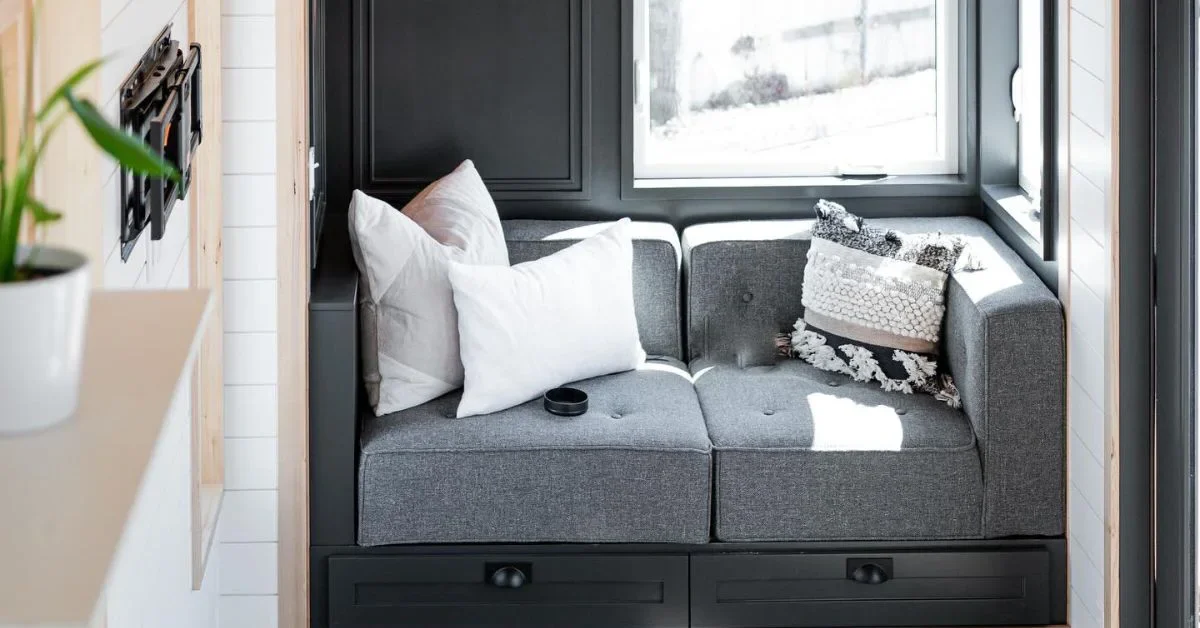
- Storage Sofas: A couch with a chaise that lifts to reveal a large storage compartment is perfect for stashing away bedding or other bulky items.
- Nesting Tables: A set of side tables that nest inside one another can be deployed when you have guests and consolidated when you don’t.
- Ottomans as All-in-Ones: A storage ottoman can be a footrest, extra seating, a coffee table, and a hidden storage unit. This versatility is crucial for a home designed for a mobile lifestyle.
Tip 3: Lockdown Your Life with Secure Storage Solutions
Imagine your house experiencing a small, sustained earthquake. That’s what happens inside when you’re driving down the highway. When traveling, it is absolutely essential to have secure storage solutions to keep your belongings safe and prevent them from becoming projectiles. Loose items flying around can quickly turn an adventure into a tiny home nightmare. A core part of how you design your tiny house for travel is ensuring everything can be locked down.
Cabinetry and Drawer Essentials
- Positive-Locking Latches: Standard magnetic or friction catches are not enough. Every single cabinet and drawer must have a positive-locking latch. These can be magnetic latches with a high pull force (15-20 lbs), child-safety latches, or beautiful marine-grade hardware designed to stay shut on a rocking boat. Check out suppliers like Rockler for robust options.
- Drawer and Cabinet Organizers: Use dividers and non-slip liners to prevent items from shifting and crashing into each other during transit.
Securing Loose Items
- No Open Shelves (Unless Secured): Avoid open shelving for anything heavy or breakable. If you love the look, install a stylish retaining bar or use bungee cords across the front during travel.
- Custom Niches: The best way to secure items like a TV, microwave, or speakers is to build a custom-sized niche for them to fit into snugly.
Tip 4: Maximize Space with Smart Retractable Features
Another way to save space and make your tiny house more road-friendly is by incorporating retractable features. This is a clever way to enhance your mobile design.
Interior Retractables
- Slide-Out Pantries: A narrow, vertical pantry that slides out from between two cabinets can hold an incredible amount of food in a tiny footprint.
- Hidden Cutting Boards: A cutting board that pulls out from under the countertop provides extra prep space when you need it.
- Retractable Beds: A bed that you can store in the ceiling or under a raised floor platform is a high-tech solution that dramatically increases your usable living space.
Exterior Retractables
Retractable elements like awnings and decks are fantastic, but they must be designed to minimize your exterior dimensions and be incredibly secure when traveling.
- Durable Awnings: A retractable awning can create a lovely outdoor patio space, but it must be made of high-quality, UV-resistant material and have a robust, locking mechanism to keep it secure against highway-speed winds.
- Fold-Up Decks: A deck that folds up to become a secure cover for a large glass door is a popular and brilliant design feature. The hinge and locking system must be heavy-duty and impeccably engineered. The need for robust mechanisms is something you must consider when planning your mobile home.
Tip 5: Build a Fortress with Durable, Road-Ready Materials
Since your tiny house will be constantly on the move, it’s important to choose durable materials that can withstand the unique wear and tear of travel. This is a critical final step to properly design your tiny house for travel.
The Exterior Shell
- Siding: Metal siding is extremely durable and low-maintenance. High-quality, properly treated wood siding can also be very durable, but it will require more upkeep.
- Roofing: A standing-seam metal roof is the gold standard for travel. It has very few exposed fasteners, reducing the risk of leaks caused by vibrations.
Interior Finishes That Flex
- Flooring: Luxury vinyl plank (LVP) is an excellent choice. It’s lightweight, waterproof, and has enough flexibility to handle the twisting and vibrations of the road without cracking or separating.
- Walls: Flexible, high-quality wood paneling is often a better choice than drywall, which can crack over time due to road vibrations.
- Grout: If you use tile in your bathroom or kitchen, a high-performance, flexible epoxy grout is essential to prevent cracking.
The SVOLTEX Approach to Durability
At SVOLTEX, we build our homes with these travel-induced stresses in mind from the very beginning. We use premium, durable materials because we know our homes are destined for a life of adventure. Our commitment to quality craftsmanship ensures that your home is not just beautiful on day one, but remains a safe, solid, and secure sanctuary after thousands of miles on the road. We know how to build a tiny home for travel because we build them to last.
Conclusion: Your Adventure Awaits
When you design your tiny house for travel, it becomes a rewarding experience that blends creative vision with smart engineering. It requires careful planning and an understanding that a mobile residence faces unique challenges. By following these tips—streamlining your layout, embracing multi-functional furniture, securing your storage, incorporating retractable features, and choosing durable materials—you can create a luxury tiny home that’s stylish, comfortable, and perfectly suited for a life of exploration.
At SVOLTEX, we’re here to help you create the perfect tiny home for your next adventure.

